 English
 中文简体
中文简体 日本語
日本語 Español
 عربى
عربى
Search
Categories
Recommend
Categories
 Lin Yuxi — International Product Sales Manager
Recommend
-
 Industry news
 -
 Industry news
 -
 Industry news
 -
 Industry news
Sep 28, 2026 - By admin
Engineering a High-Performance Stainless Steel Vacuum Flask for Outdoor Sports
Content
- 1 Product Overview and Core Specifications
- 2 Multi-Layer Construction for Thermal Performance
- 3 Outer Shell Protection and Surface Durability
- 4 Antibacterial Inner Surface Design
- 5 One-Handed Lid for Active Use
- 6 Non-Slip Base and Stable Placement
- 7 Advantages Over Common Market Alternatives
- 8 Manufacturing Expertise Behind the Product
- 9 Production Process Considerations
- 10 Applications Across Multiple User Scenarios
- 11 Customization and Supply Program Potential
- 12 Care and Use Recommendations
- 13 Why Manufacturing Discipline Matters to Buyers
- 14 Frequently Asked Questions
- 14.1 What is the capacity of the flask?
- 14.2 What materials are used for the inner and outer vessels?
- 14.3 How does the flask maintain beverage temperature?
- 14.4 Does the flask have an antibacterial feature?
- 14.5 Does the antibacterial coating replace regular cleaning?
- 14.6 Is the flask leak-resistant?
- 14.7 Can the flask be opened with one hand?
- 14.8 What is the purpose of the powder coating?
- 14.9 What does the non-slip base do?
- 14.10 Is the flask suitable for outdoor use?
- 14.11 Can the product be customized?
- 14.12 What should procurement teams verify before placing an order?
- 15 Conclusion
- 16 References
- 17 Product: Stainless Steel Vacuum Flask for Outdoor Sports
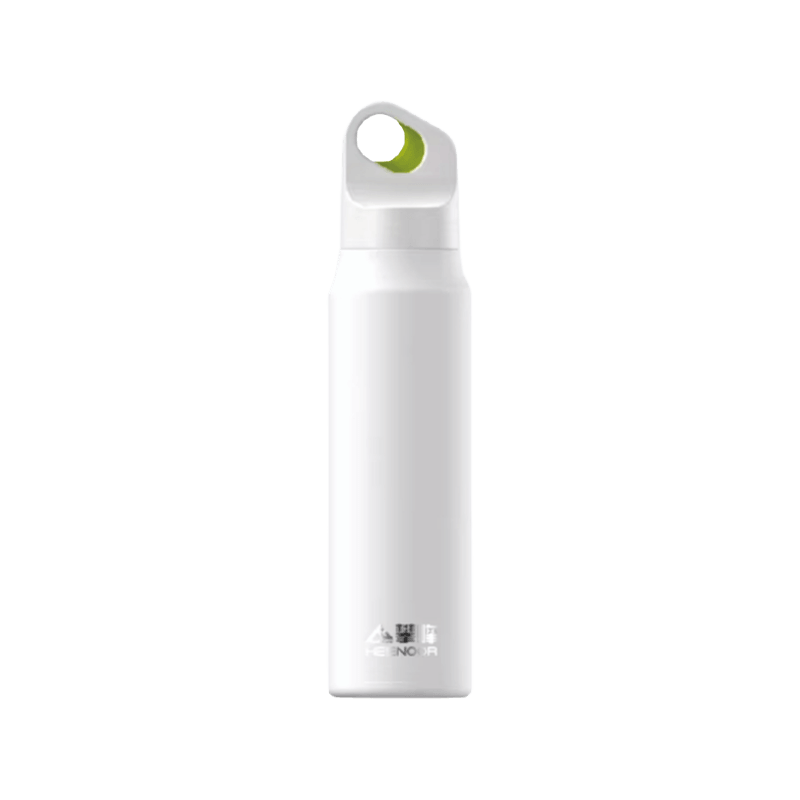
Reliable hydration equipment must perform consistently across changing environments. During a morning commute, a long drive, a training session, a hiking trip, or a full day at a campsite, users expect a bottle to protect beverage temperature, resist leakage, remain comfortable to carry, and withstand repeated use. The Stainless Steel Vacuum Flask for Outdoor Sports, model XN-9110, is designed around these practical requirements. With a 630 ml capacity, a 316L stainless steel inner liner, a 304 stainless steel outer body, a copper-coated thermal barrier, a high-vacuum space, an antibacterial surface treatment, and a one-handed lid, the flask combines functional engineering with everyday portability.
The product is manufactured by Heenoor Co., Ltd., a drinkware company with experience in product development, tooling, engineering validation, standardized production, and quality management. Its capabilities extend across stainless steel, titanium, plastic, and glass drinkware, allowing it to support a wide range of customized and large-volume programs. This manufacturing background is important because a vacuum flask is not defined by a single material or component. Its performance depends on the interaction of forming, welding, polishing, coating, vacuum processing, sealing, assembly, and inspection.
This article examines the product’s construction, operating advantages, user-focused design, manufacturing strengths, quality considerations, application range, and suitability for brands and procurement teams seeking dependable drinkware. It also compares the flask’s engineering approach with common market alternatives and explains how the product can support outdoor, sports, commuting, home, and promotional drinkware programs.
Stainless Steel Vacuum Flask for Outdoor Sports
Product Overview and Core Specifications
The XN-9110 is a stainless steel vacuum flask developed for hot and cold beverage use. Its 630 ml capacity provides a practical middle ground between compact personal bottles and larger outdoor hydration containers. It is large enough to support several hours of use while remaining manageable for carrying in a bag, vehicle cup holder, or hand.
Specification |
Details |
Model |
XN-9110 |
Product type |
Stainless steel vacuum flask |
Capacity |
630 ml |
Inner pot material |
Austenitic stainless steel SUS316L |
Outer pot material |
Austenitic stainless steel SUS304 |
Lid material |
PC material with food-grade silicone |
Inner surface treatment |
Electrolytic polishing with silver ion antibacterial coating |
Thermal structure |
Copper-coated inner liner and high-vacuum space layer |
Exterior finish |
Electrostatic spray powder coating |
Base design |
Non-slip pad for improved stability |
These specifications reveal a product designed around layered performance rather than a single headline feature. The inner liner addresses beverage contact, corrosion resistance, cleanability, and hygiene. The vacuum and copper elements address heat transfer. The outer shell contributes structural protection and surface durability. The lid manages access and sealing. Finally, the coating and non-slip base improve handling and placement.
Many low-cost bottles may offer stainless steel construction but use a simpler grade, a less refined internal finish, a basic screw cap, or a single-wall design. The XN-9110 is differentiated by combining several performance-oriented details into one coordinated structure. This is especially relevant to buyers evaluating products for repeated daily use rather than occasional promotional distribution.
Multi-Layer Construction for Thermal Performance
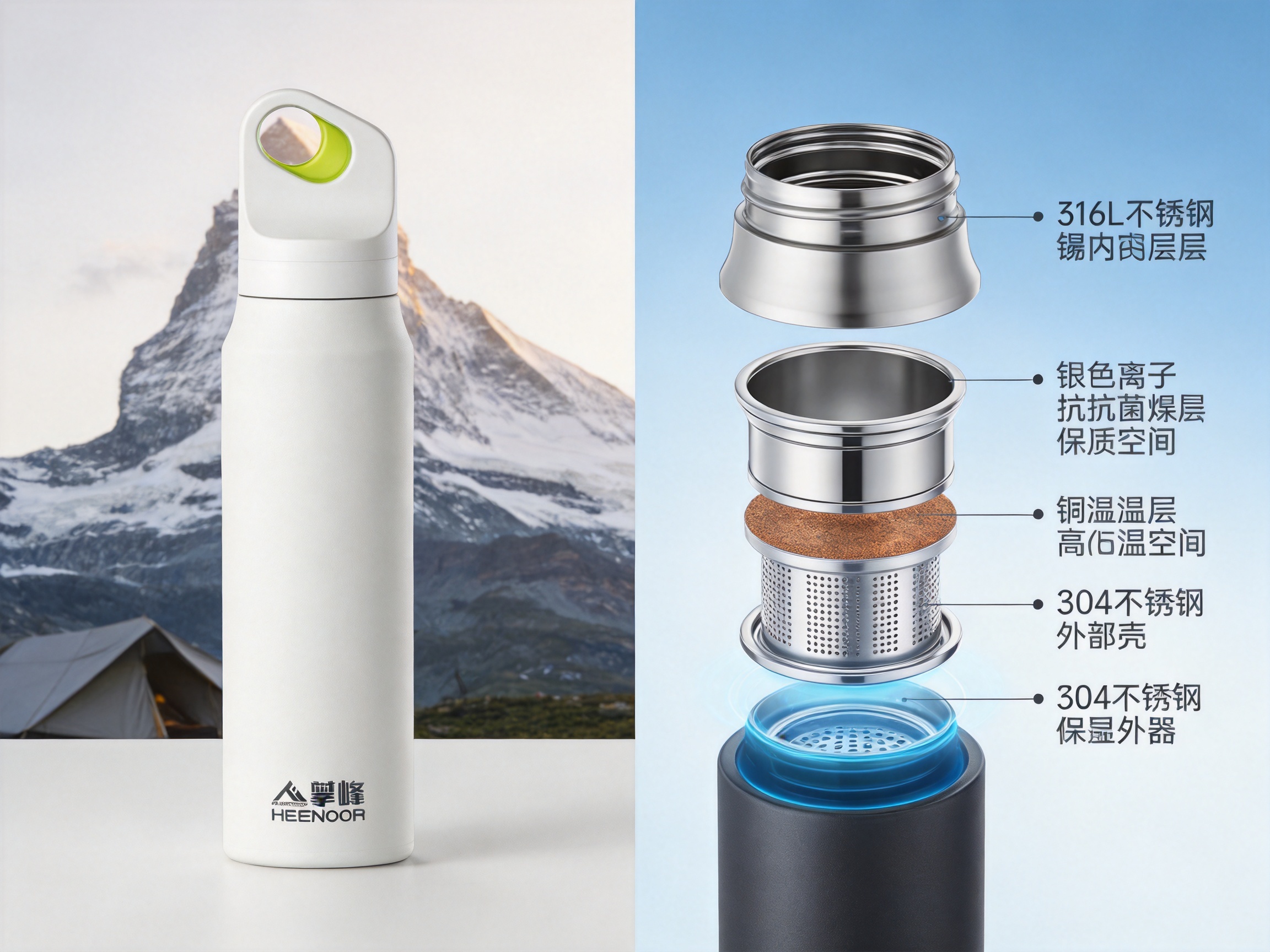
Temperature retention is one of the main reasons consumers choose a vacuum flask instead of a conventional bottle. A typical single-wall container allows heat to move relatively easily between the beverage and the surrounding environment. A double-wall vacuum flask reduces this transfer by removing most of the air between the walls. The XN-9110 adds a copper layer to the outer wall of the inner liner, creating an additional thermal management element.
316L Stainless Steel Inner Liner
The inner liner is made from SUS316L austenitic stainless steel. This grade is widely recognized for its corrosion resistance and suitability for demanding environments. The low-carbon formulation represented by the “L” designation can support improved resistance to certain forms of corrosion after welding and fabrication when properly processed. For drinkware, the material provides a durable surface that can handle repeated contact with water, tea, coffee, sports beverages, and other common drinks.
Material selection is particularly important at the inner liner because this is the part that directly contains the beverage. A suitable liner must resist corrosion, avoid imparting unwanted taste or odor under normal use, and maintain structural integrity through repeated heating, cooling, cleaning, and transportation. SUS316L provides a premium material position compared with many standard stainless steel alternatives.
The use of 316L also supports market positioning for customers who require a stronger technical story. It can be relevant to outdoor users exposed to humidity, sports users who frequently wash their bottles, and professional procurement teams that specify corrosion-resistant materials as part of their product requirements.
Electrolytic Polishing for a Refined Inner Surface
The inner liner receives an electrolytic polishing treatment. In this process, a controlled electrochemical action removes a small amount of material from the metal surface, helping to smooth microscopic irregularities. A smoother internal surface may reduce areas where residue can remain, support easier cleaning, and improve the visual and tactile quality of the metal when inspected.
Electrolytic polishing is more than a cosmetic step. Surface condition influences cleanability and long-term maintenance. Rougher surfaces can retain deposits, particularly when beverages containing sugar, minerals, oils, or pigments are left in a container for extended periods. A refined surface supports better hygiene practices when combined with timely washing and proper drying.
For manufacturers, polishing also requires process control. Current density, treatment time, bath condition, rinsing, and post-treatment handling can influence the final result. Consistent execution is therefore important when a product is manufactured in volume. Heenoor’s integration of engineering validation and standardized production provides a foundation for managing such repeatability.
Copper Layer and High-Vacuum Space
The outer wall of the inner liner is coated with copper, and a high-vacuum space is created between the inner and outer walls. These two elements contribute to the flask’s insulation architecture. Vacuum reduces the amount of gas available to carry heat by conduction and convection. Copper contributes to the management of radiant heat transfer and can improve the efficiency of the thermal barrier when properly integrated into the vessel structure.
Heat moves through several pathways. It can travel through the metal at the neck and base, pass through the walls, and radiate across the space between the inner and outer shells. A well-designed vacuum flask addresses these pathways through material selection, geometry, vacuum processing, and structural design. The XN-9110’s copper-coated inner liner and high-vacuum layer work together to reduce heat exchange and help preserve beverage temperature.
This construction provides an advantage over single-wall bottles and basic double-wall containers. A single-wall metal bottle offers little insulation. A basic insulated bottle may have a double-wall vacuum structure but omit the copper layer or use a less carefully engineered internal system. While real-world performance also depends on beverage volume, starting temperature, ambient conditions, lid construction, and frequency of opening, the multi-layer design gives the XN-9110 a strong foundation for hot and cold beverage retention.
Outer Shell Protection and Surface Durability
The outer layer is made from SUS304 austenitic stainless steel. This grade is commonly used in consumer products because it provides a useful balance of corrosion resistance, strength, formability, and manufacturing practicality. Positioned outside the vacuum structure, it protects the internal thermal system from everyday handling, minor impacts, and environmental exposure.
The exterior receives an electrostatic spray powder coating. Powder coating uses electrically charged dry powder applied to a prepared surface, followed by controlled heating to form a continuous finish. Compared with an untreated metal exterior, this coating can improve grip, visual appeal, color consistency, and resistance to ordinary surface wear.
A durable exterior is valuable in outdoor and sports applications because the flask may be placed on benches, vehicle consoles, gym floors, campsite surfaces, or backpack pockets. The coating can also give brands flexibility when selecting a custom visual identity. Depending on project requirements, exterior color and graphic treatment may be discussed during product development and manufacturing review.
The powder-coated surface also contributes to user comfort. Bare metal can feel cold in winter and may become slippery when wet. A coated finish can provide a more controlled hand feel, supporting confident handling during exercise, commuting, or travel. The coating is not a substitute for careful use, but it adds a practical layer of protection to the product’s everyday exterior.
Antibacterial Inner Surface Design
The inner liner includes a silver ion antibacterial coating. According to the supplied product information, the treatment disrupts bacterial cell walls and membranes and provides antibacterial performance against Escherichia coli and Staphylococcus aureus that meets the JIS Z 2801 standard. This feature is intended to support hygiene in a reusable drinkware product.
Silver ion technology is commonly used in antibacterial materials because silver ions can interact with microbial cell structures. The stated mechanism involves damage to cell walls and membranes, which can interfere with microbial survival and reproduction. In practical terms, this treatment is intended to reduce bacterial activity on the treated surface under the applicable test conditions.
However, antibacterial treatment should be understood as one part of a complete hygiene system. It does not eliminate the need for regular cleaning, rinsing, drying, and appropriate beverage handling. Users should not leave beverages in the flask for unnecessarily long periods, and they should follow cleaning guidance suitable for the lid, silicone seal, and stainless steel body. The coating supports hygiene; it does not replace responsible maintenance.
For professional buyers, the reference to JIS Z 2801 provides a recognizable testing framework. Procurement teams should request current test documentation, test conditions, treated-surface details, and applicable production specifications when a project requires formal verification. This is a sound practice for any antibacterial product because performance can depend on the coating, test organism, contact time, surface preparation, and production controls.
Compared with an ordinary uncoated bottle, the treated inner surface gives the XN-9110 an additional point of differentiation. This can be valuable in sports, wellness, education, travel, hospitality, and employee gift programs where hygiene messaging is important. It also gives brands a technical feature that can be explained clearly without relying only on appearance or capacity.
One-Handed Lid for Active Use
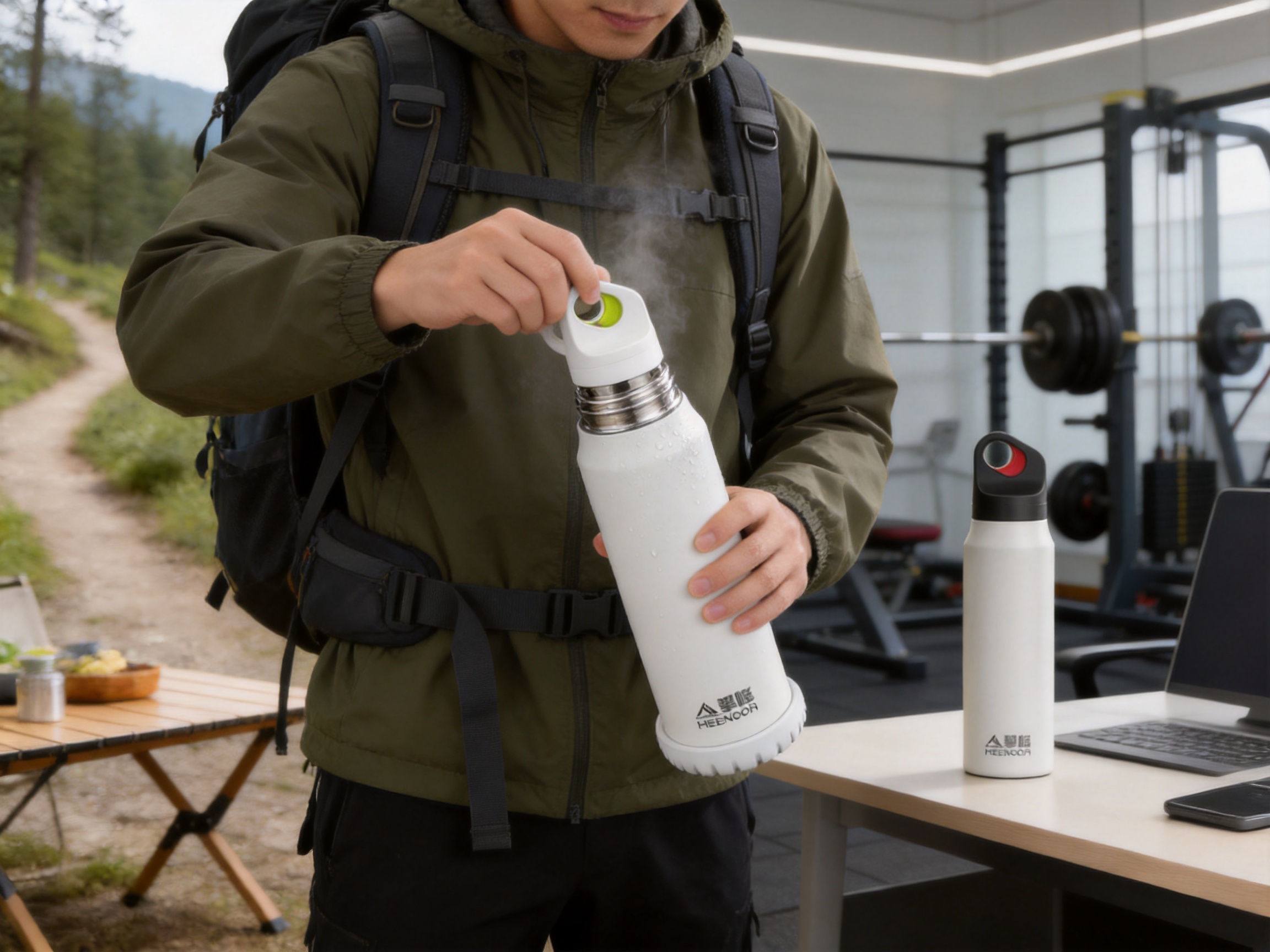
The lid is designed for one-handed opening and closing. This supports users who need to drink while carrying equipment, walking, commuting, driving, or participating in outdoor activities. The design aims to make access more convenient without requiring both hands to unscrew a conventional cap.
The product information also indicates that the lid can be removed without obstructing the user’s view. This is particularly relevant when the flask is used in a vehicle or during movement. Any drinking product used near driving should be handled responsibly, and users should avoid actions that distract them from operating a vehicle. Within those safety limits, a lid that is simple to open and does not create an unnecessary visual obstruction can improve convenience.
A functional lid must balance ease of opening with reliable closure. If the mechanism is too loose, accidental opening becomes a concern. If it is too tight or complex, one-handed use loses its benefit. The XN-9110 addresses this requirement with a sealing system designed to prevent leakage when the flask is inverted. The lid uses PC material together with food-grade silicone, combining a rigid structural component with a flexible sealing element.
Leak Resistance and Seal Performance
Leak resistance is essential for a bottle carried in a backpack, work bag, sports bag, or vehicle. A leaking container can damage electronics, clothing, documents, and other personal items. The XN-9110 is designed to seal effectively and remain leak-resistant when inverted, offering greater confidence during transport.
Silicone is used in many drinkware seals because it can provide elasticity, temperature tolerance, and repeated compression performance when properly specified. The seal must fit accurately into its receiving channel, and the lid components must be assembled with consistent force. A reliable leak-resistant result therefore depends not only on the silicone material but also on dimensional control, mold precision, assembly technique, and inspection.
Users should still close the lid fully, keep the seal clean, and check that no beverage residue prevents proper contact. Seals are wear components and may eventually require replacement depending on use frequency and cleaning conditions. Clear maintenance instructions can help extend the useful life of the product.
Non-Slip Base and Stable Placement
The bottom of the flask is equipped with a non-slip pad. This detail improves stability on desks, gym benches, kitchen counters, vehicle consoles, and other surfaces. It can also help reduce direct contact between the metal base and hard surfaces, limiting noise and reducing the chance of cosmetic scratching.
Stability is especially useful for a tall or narrow container. A bottle that slides easily may fall when a table is bumped or a vehicle moves. The non-slip element creates additional friction and supports more secure placement. It does not make the flask impossible to tip, but it contributes to a more controlled user experience.
From a product development perspective, the base is a small component with an important influence on perceived quality. Users often judge a bottle through repeated micro-interactions: how it sits on a desk, how it sounds when placed down, whether it moves when touched, and whether it leaves marks on a surface. Attention to the base helps the flask feel more complete and thoughtfully engineered.
Advantages Over Common Market Alternatives
The market includes a wide range of drinkware, from disposable plastic bottles to simple stainless steel containers and premium insulated flasks. The XN-9110 competes most directly with reusable vacuum bottles intended for daily hydration and active use. Its advantages can be understood across several dimensions.
Compared with Single-Wall Metal Bottles
A single-wall metal bottle is often lightweight and inexpensive, but it provides limited insulation. Hot drinks can make the exterior uncomfortable to hold, while cold drinks may cause condensation. Beverage temperature changes more quickly because heat can move directly through the metal wall.
The XN-9110 uses a high-vacuum structure combined with a copper layer to create a substantially more effective thermal barrier. Its exterior is designed to remain more comfortable during use, and the contents are better protected from ambient temperature changes. This makes it more suitable for extended outdoor activities, long commutes, and all-day hydration.
Compared with Basic Double-Wall Bottles
Basic double-wall bottles can provide insulation, but their performance depends on the quality of the vacuum, the materials used, the lid design, and the manufacturing consistency. Some products use a standard stainless steel liner without a specialized antibacterial coating or copper thermal layer.
The XN-9110 combines a 316L inner liner, electrolytic polishing, silver ion antibacterial treatment, copper coating, high vacuum, and a 304 outer shell. This broader feature set gives it a stronger technical profile than a basic double-wall product. The advantage is not simply the number of features; it is the way the features address separate user concerns such as hygiene, temperature retention, durability, and handling.
Compared with Conventional Screw-Cap Flasks
Screw-cap flasks can seal effectively, but they usually require two hands to open and close. The cap may also need to be removed and held separately while the user drinks. For some users, this is acceptable. For sports, travel, commuting, and outdoor applications, a one-handed mechanism can provide greater convenience.
The XN-9110’s lid is designed for rapid access while retaining a secure seal. Its PC and food-grade silicone construction supports a combination of rigidity and flexibility. This makes it a more practical choice for users who frequently drink while moving between activities.
Compared with Uncoated Exterior Bottles
An uncoated metal bottle can have a clean industrial appearance, but it may be more vulnerable to visible scratches and may feel slippery in wet conditions. The XN-9110’s electrostatic spray powder coating provides a more distinctive appearance and a more controlled hand feel. It also offers opportunities for color-based product differentiation and brand customization.
Compared with Oversized Outdoor Containers
Large outdoor containers can provide substantial capacity, but they may be heavy, difficult to store, and inconvenient for everyday commuting. The 630 ml capacity of the XN-9110 is more adaptable to daily routines. It can support hydration without imposing the carrying burden associated with very large bottles.
The product therefore occupies a useful position between compact drinkware and high-capacity outdoor equipment. It offers a substantial beverage volume while keeping portability central to the design.
Manufacturing Expertise Behind the Product
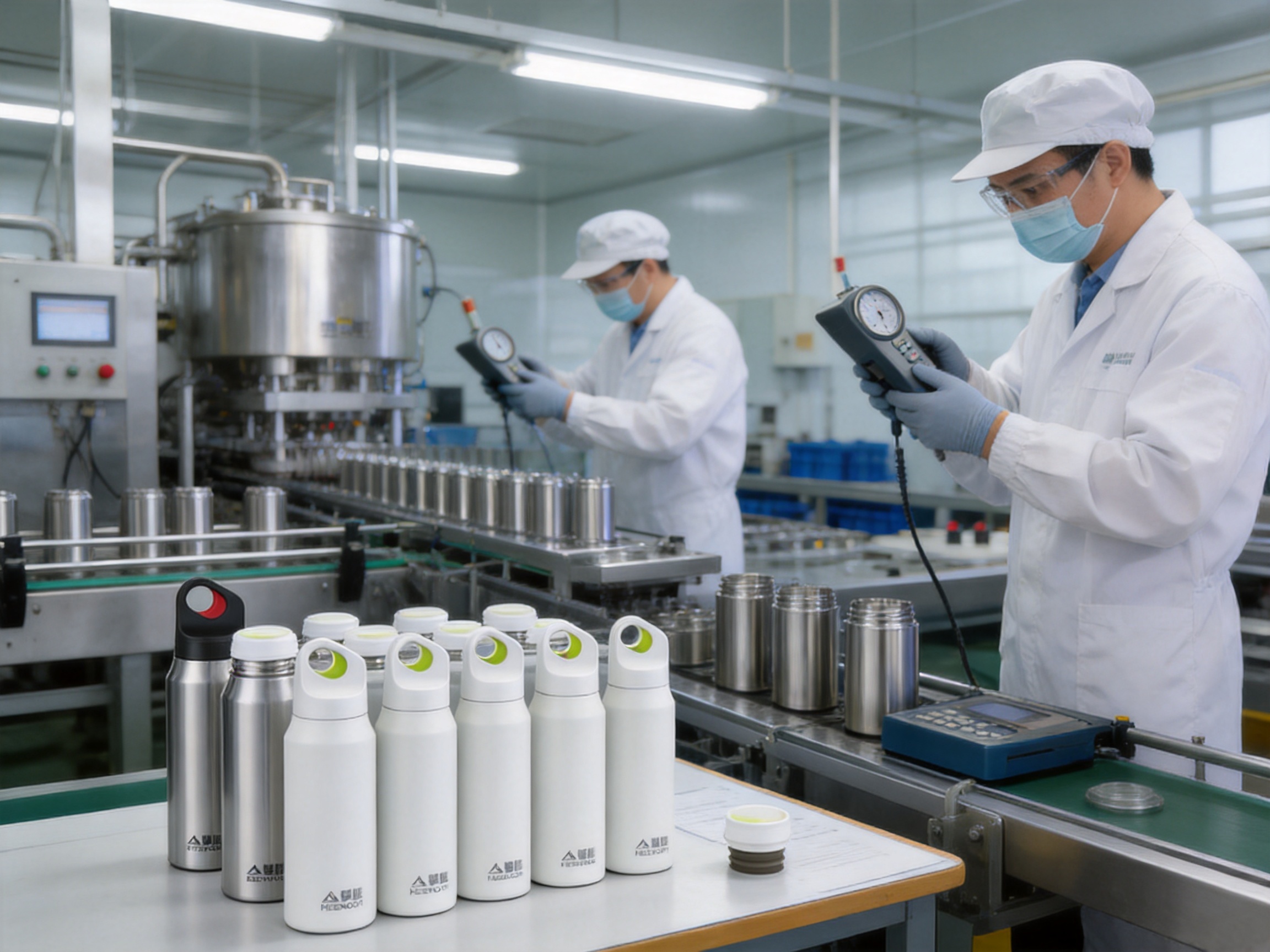
A technically specified flask is only as dependable as the manufacturing system used to produce it. Vacuum drinkware requires multiple processes to work together accurately. Heenoor Co., Ltd. describes its capabilities as integrating product design, engineering validation, tooling development, standardized production, and quality management. This integrated approach can reduce the risks that occur when design and production are treated as separate activities.
Product Design and Engineering Validation
The development of a vacuum flask begins with decisions about capacity, wall geometry, mouth opening, lid interface, insulation structure, base stability, coating areas, and assembly sequence. Each decision affects other parts of the product. A change to the opening may influence the lid seal. A change to the body diameter may affect vacuum processing, tooling, packaging, and carrying comfort.
Engineering validation helps identify these relationships before mass production. It can include dimensional review, material confirmation, fit testing, sealing evaluation, thermal testing, coating assessment, and user-oriented handling checks. For a product such as the XN-9110, validation is particularly important because the vacuum layer and lid system must function together without compromising portability or durability.
Tooling Development
Tooling determines how consistently metal and plastic components can be formed. Stainless steel bodies may require forming, drawing, welding, trimming, polishing, and finishing operations. Plastic lids require molds capable of producing accurate shapes, sealing interfaces, hinge or opening features, and consistent wall thickness.
Well-developed tooling supports repeatable dimensions across production batches. It can also improve material utilization, reduce visible defects, and help maintain alignment between the inner liner, vacuum chamber, outer shell, and lid. Tooling quality is a critical but often invisible contributor to final product performance.
Standardized Production
Standardized production translates approved engineering specifications into repeatable factory operations. Work instructions, process parameters, inspection points, and component controls help prevent variation. This is especially important when a product includes several surface treatments and materials.
For the XN-9110, production control may involve managing the 316L inner liner, the 304 outer shell, the copper layer, vacuum processing, powder coating, antibacterial treatment, PC lid, silicone seal, and non-slip base. Each component must meet its intended specification, and the completed assembly must maintain functional performance.
Quality Management
Quality management extends from incoming materials to final shipment. Material identification helps confirm that the correct stainless steel grades are used. Dimensional inspection verifies fit and assembly compatibility. Surface inspection checks polishing, coating, and appearance. Functional tests can evaluate sealing, lid operation, stability, and vacuum performance.
For brands and procurement teams, a supplier’s quality system can be as important as the product specification itself. A well-designed sample is not enough if mass production cannot reproduce it. Heenoor’s stated focus on quality management and long-term supply stability supports the requirements of customers who need dependable repeat orders.
Production Process Considerations
The following process overview illustrates the manufacturing disciplines typically required for a multi-layer vacuum flask such as the XN-9110. Exact production parameters may vary according to engineering requirements, equipment, and customer specifications.
Material Preparation
Production begins with the preparation and verification of stainless steel, plastic, silicone, coating materials, and other components. Correct material selection is necessary because the inner and outer vessels serve different functions. The 316L inner liner is selected for beverage contact and corrosion resistance, while the 304 outer shell provides structural and environmental protection.
Metal Forming and Joining
Stainless steel sheets or formed components are shaped into the required inner and outer vessel geometry. Joining processes must create secure, consistent connections while minimizing distortion. The inner vessel must be sufficiently robust to contain the beverage, and the outer shell must maintain the intended vacuum chamber.
Weld quality is important because defects can affect structural integrity, appearance, and the ability to maintain a vacuum. Process control, fixture accuracy, and inspection help reduce these risks.
Surface Treatment
The inner surface is electrolytically polished and prepared for the silver ion antibacterial coating. The outer shell is prepared for electrostatic powder coating. Surface preparation affects adhesion, appearance, corrosion resistance, and long-term durability. Cleaning and rinsing stages must be controlled so that residues do not interfere with later treatments.
Vacuum Processing
After the vessel components are joined, the space between the walls is processed to create a high-vacuum layer. This stage is central to thermal performance. The production system must achieve the required vacuum condition and preserve it through final sealing and subsequent handling.
Vacuum integrity may be evaluated through appropriate inspection methods. Products that fail to maintain the required internal condition can experience reduced insulation performance, so vacuum control is a critical quality checkpoint.
Coating and Curing
The outer powder coating is applied electrostatically and then cured under controlled conditions. The coating must cover the intended areas evenly and bond properly to the stainless steel surface. Color, gloss, thickness, adhesion, and resistance to ordinary handling can be reviewed as part of appearance and durability control.
Lid Assembly
The PC lid, food-grade silicone seal, opening mechanism, and related components are assembled and checked for fit. A small dimensional error can affect one-handed operation or leak resistance. Assembly quality is therefore important to the user experience and the product’s protective function.
Final Inspection and Packing
Final inspection can include appearance review, dimensional checks, lid operation, leak testing, stability assessment, and packaging verification. Packaging should protect the powder coating, lid mechanism, and base during transportation. For international projects, packaging and labeling requirements can be coordinated during the development process.
Applications Across Multiple User Scenarios
The product’s combination of insulation, portability, hygiene-oriented treatment, and one-handed operation allows it to serve several markets.
Outdoor Camping
Camping conditions can change rapidly, with cool mornings, strong sunlight, uneven surfaces, and limited access to kitchen facilities. A vacuum flask helps users carry hot coffee, tea, soup-compatible beverages, or chilled water while reducing the need for constant reheating or refrigeration.
The powder-coated outer shell supports outdoor handling, while the non-slip base is useful when the flask is placed on a camp table or other temporary surface. Its 630 ml capacity is appropriate for personal use during a short hike, picnic, or day trip.
Sports and Fitness
During exercise, users value quick access to water and a container that can be carried between training areas. The one-handed lid can make drinking more convenient when the user is moving between activities. The insulated body also helps maintain the preferred temperature of the beverage.
Sports and fitness facilities may also appreciate the product’s durable exterior and hygiene-oriented inner surface. As with all reusable drinkware, regular cleaning is essential, particularly when the bottle is used with electrolyte drinks, flavored beverages, or other liquids that may leave residue.
Hiking and Travel
Hikers and travelers often need a bottle that can tolerate repeated transport while fitting into a pack or side pocket. The stainless steel construction offers a more durable alternative to disposable containers. The leak-resistant lid helps protect other belongings, while the 630 ml size balances capacity with portability.
Daily Commuting
For office workers, students, and commuters, a flask can support hydration throughout the day. The powder-coated finish presents a polished appearance suitable for professional and casual settings. Its non-slip base helps it remain steady on desks, and the one-handed lid can simplify use during breaks or transitions between locations.
Home Relaxation
The flask can also be used at home for tea, coffee, flavored water, or chilled beverages. Its insulation allows users to prepare a drink in advance and enjoy it over a longer period. The refined inner surface and removable lid components can support routine cleaning when maintained correctly.
Corporate and Promotional Programs
Reusable drinkware is frequently selected for employee gifts, event merchandise, wellness programs, travel campaigns, and customer appreciation packages. The XN-9110 offers a larger technical feature set than a basic promotional bottle, which can improve perceived value. The exterior powder coating also creates opportunities for color matching and visual customization subject to project review.
Customization and Supply Program Potential
Heenoor’s experience in stainless steel, titanium, plastic, and glass drinkware allows it to support more than standard catalog purchasing. Brands and procurement teams may require changes to color, surface finish, packaging, logo application, capacity, lid configuration, or material specification. Such changes should be evaluated through a structured engineering process rather than treated as purely visual modifications.
For example, changing the lid may affect sealing, opening force, tooling, and cleaning. Changing the coating may influence surface preparation and curing. Changing the capacity may require new vessel geometry and may affect vacuum processing. Changing the mouth opening may influence drinking comfort and compatibility with the existing lid. A capable manufacturing partner can assess these impacts before production begins.
Heenoor’s stated integration of design, validation, tooling, production, and quality management is relevant to this type of project. It enables discussions to move from an initial product concept toward manufacturable specifications, tested samples, approved tooling, and repeatable production.
Long-term supply stability is also important. Drinkware programs may require multiple production runs over several years. Consistent materials, approved color references, retained samples, controlled packaging, and documented inspection practices can help maintain continuity between orders.
Care and Use Recommendations
To preserve performance, users should rinse the flask after each use and wash it according to the care instructions supplied with the product. The lid, silicone seal, and drinking passages should receive particular attention because residue can remain in small channels and openings.
Users should avoid storing beverages unnecessarily long, especially sweetened or dairy-based drinks. After cleaning, the flask and lid should be dried thoroughly before storage. Keeping the lid open during drying can improve air circulation and reduce residual moisture.
The flask should not be used with contents that are incompatible with stainless steel, silicone, PC material, or the product’s sealing system. Extremely hot liquids should be handled carefully because steam and pressure can affect opening safety. Users should allow sufficient space at the top and close the lid according to the instructions.
Although the exterior coating is designed for durability, unnecessary contact with sharp or abrasive objects should be avoided. The non-slip base should be kept clean so that dust and debris do not reduce its friction. Periodic inspection of the silicone seal is recommended, and worn or damaged seals should be replaced when replacement parts are available.
Why Manufacturing Discipline Matters to Buyers
Product buyers increasingly evaluate drinkware through a combination of performance, compliance, aesthetics, supply reliability, and total ownership cost. A low purchase price may not represent good value if the product leaks, loses insulation quickly, develops coating defects, or varies significantly between production batches.
The XN-9110 provides a platform for a more complete value proposition. Its 316L inner liner supports a premium material position. The antibacterial treatment provides a hygiene-related feature. The copper layer and vacuum space support thermal performance. The powder coating supports durability and design flexibility. The one-handed lid improves convenience. The non-slip base adds stability. Each detail contributes to product differentiation, but the final result depends on manufacturing consistency.
For this reason, buyers should evaluate both the sample and the supplier’s production system. Important questions may include how materials are verified, how vacuum integrity is checked, how coatings are controlled, how antibacterial performance is documented, how seals are inspected, and how changes are managed after approval. A manufacturing partner capable of answering these questions clearly can reduce project risk.
Frequently Asked Questions
What is the capacity of the flask?
The XN-9110 has a capacity of 630 ml. This size is intended to balance useful beverage volume with portability for commuting, sports, outdoor activities, travel, and daily use.
What materials are used for the inner and outer vessels?
The inner liner is made from SUS316L austenitic stainless steel, while the outer shell is made from SUS304 austenitic stainless steel. The lid uses PC material and food-grade silicone.
How does the flask maintain beverage temperature?
The flask uses a multi-layer construction that includes a copper-coated outer wall on the inner liner and a high-vacuum space between the inner and outer vessels. These elements reduce heat transfer and support the retention of hot or cold beverage temperatures.
Does the flask have an antibacterial feature?
Yes. The inner liner includes a silver ion antibacterial coating. The supplied product information states that the coating provides antibacterial performance against E. coli and Staphylococcus aureus meeting the JIS Z 2801 standard under applicable test conditions.
Does the antibacterial coating replace regular cleaning?
No. Regular cleaning, rinsing, drying, and proper beverage handling remain necessary. The antibacterial treatment is an additional hygiene-oriented feature and should not be considered a substitute for normal care.
Is the flask leak-resistant?
The lid is designed to seal securely and prevent leakage when the flask is inverted. Users should close the lid fully, keep the seal clean, and inspect the silicone component regularly.
Can the flask be opened with one hand?
The lid is designed for one-handed opening and closing. This feature is intended to improve convenience during commuting, outdoor activities, sports, and other situations where a quick-access lid is useful.
What is the purpose of the powder coating?
The electrostatic spray powder coating provides an attractive exterior finish, supports surface durability, and creates a smoother, more controlled hand feel. It also allows potential customization of the flask’s exterior appearance.
What does the non-slip base do?
The non-slip pad helps the flask remain stable on desks, counters, vehicle consoles, gym surfaces, and other flat areas. It also helps reduce direct contact between the metal base and hard surfaces.
Is the flask suitable for outdoor use?
Yes. The product is designed for outdoor camping, hiking, sports, fitness, travel, and commuting. Its stainless steel construction, insulation system, coated exterior, secure lid, and portable capacity support these applications.
Can the product be customized?
Customization should be discussed with the manufacturer because requirements may affect tooling, materials, testing, minimum order quantities, and production schedules. Potential project areas may include color, exterior graphics, packaging, capacity, or selected component configurations.
What should procurement teams verify before placing an order?
Procurement teams should confirm material specifications, capacity tolerance, lid and seal performance, vacuum performance, coating requirements, antibacterial test documentation, packaging, inspection standards, customization details, production capacity, and delivery expectations.
Conclusion
The Stainless Steel Vacuum Flask for Outdoor Sports is built as a complete performance system rather than a simple metal container. Its SUS316L inner liner provides a corrosion-resistant beverage-contact surface, while electrolytic polishing supports a refined and maintainable interior. The silver ion antibacterial coating adds a hygiene-oriented feature with stated performance against E. coli and Staphylococcus aureus under the JIS Z 2801 standard.
The thermal structure combines a copper-coated inner liner with a high-vacuum space and a SUS304 outer shell. This layered approach is designed to reduce heat transfer and support hot and cold beverage retention. Outside the vessel, the powder-coated finish improves handling and appearance, while the non-slip base adds stability.
The PC and food-grade silicone lid brings together one-handed access and leak-resistant sealing. These characteristics make the flask suitable for outdoor recreation, sports, fitness, commuting, travel, home use, and selected corporate programs. Its 630 ml capacity provides a practical balance between hydration volume and portability.
Behind the product is a manufacturing model based on design, engineering validation, tooling development, standardized production, and quality management. Heenoor Co., Ltd.’s experience across stainless steel, titanium, plastic, and glass drinkware supports its role as a manufacturing partner for brands and procurement organizations seeking dependable, scalable drinkware programs.
For buyers comparing market alternatives, the strongest advantage of the XN-9110 is the coordination of several useful features: premium inner material, vacuum insulation, copper thermal support, antibacterial treatment, one-handed access, leak resistance, exterior durability, and stable placement. Together, these details create a practical flask designed for repeated use and supported by a manufacturing process intended to deliver consistent results.
References
1. Product specification and technical information for Stainless Steel Vacuum Flask for Outdoor Sports, model XN-9110.
2. Manufacturer-provided information concerning SUS316L and SUS304 stainless steel construction, electrolytic polishing, copper coating, high-vacuum insulation, powder coating, and lid materials.
3. JIS Z 2801, testing method for antibacterial activity and efficacy on non-porous surfaces.
4. General technical principles of vacuum insulation, thermal conduction, convection, and radiant heat transfer in double-wall vessels.
5. General manufacturing principles for stainless steel forming, welding, electrolytic polishing, powder coating, silicone sealing, and vacuum vessel production.
6. Manufacturer company information concerning product development, engineering validation, tooling development, standardized production, quality management, and international drinkware supply.
Product: Stainless Steel Vacuum Flask for Outdoor Sports

You may also like…
Copyright © 2025 Heenoor Co., Ltd. All Rights Reserved.
 Custom Stainless Steel Drinkware Manufacturers
BACK TOP