 English
 中文简体
中文简体 日本語
日本語 Español
 عربى
عربى
Search
Categories
Recommend
Categories
 Lin Yuxi — International Product Sales Manager
Recommend
-
 Industry news
 -
 Industry news
 -
 Industry news
 -
 Industry news
Oct 08, 2026 - By admin
Pure Titanium Magnetic Stewed Tea Vacuum Flask: Advanced Design, Manufacturing Excellence, and Premium Tea Brewing Performance
Content
- 1 A Tea Flask Designed for Slow, Sealed Extraction
- 2 TA1 Pure Titanium as the Core Material
- 3 Distinctive Crystallized Surface Treatment
- 4 Magnetic Sealing and Dual-Purpose Lid Design
- 5 Lotus-Shaped Filter Screen for Cleaner Brewing
- 6 Brewing Performance for Aged and Robust Teas
- 7 Advantages Over Conventional Tea and Drinkware Options
- 8 Manufacturing Capabilities Supporting Product Reliability
- 9 Scalable Manufacturing for Brand and Procurement Programs
- 10 Applications in Daily Life and Professional Settings
- 11 Care, Cleaning, and Long-Term Use
- 12 Why This Product Is Suitable for Premium Drinkware Lines
- 13 Q&A
- 13.1 What is the main material of the flask?
- 13.2 Why is titanium suitable for tea drinkware?
- 13.3 What types of tea are most suitable for this flask?
- 13.4 Can the lid be used as a cup?
- 13.5 How does the magnetic lid work?
- 13.6 Does the flask include a tea filter?
- 13.7 What capacities are available?
- 13.8 How much do the two models weigh?
- 13.9 Is the product suitable for travel?
- 13.10 What gives the exterior its distinctive appearance?
- 13.11 What manufacturing capabilities support the product?
- 13.12 Is this product suitable for large-volume purchasing?
- 14 Conclusion
- 15 References
- 16 Product: Pure Titanium Magnetic Stewed Tea Vacuum Flask
Modern tea drinkers increasingly expect more from a vacuum flask than basic insulation. A premium tea vessel must preserve flavor, support precise brewing, prevent leakage, remain comfortable to carry, and withstand years of repeated use. It should also complement the rituals of tea preparation rather than treating tea as an afterthought. The Pure Titanium Magnetic Stewed Tea Vacuum Flask is designed around these requirements, combining TA1 pure titanium construction, vacuum insulation, an integrated tea filter, a magnetic sealing system, and a removable drinking lid.
This product is intended for consumers, hospitality businesses, gift programs, specialty tea retailers, and procurement teams looking for a refined tea-brewing solution. It is suitable for aged Pu-erh, aged white tea, and other teas that benefit from prolonged, high-temperature extraction. Available in 420 ml and 700 ml capacities, the flask is compact enough for everyday carrying while offering the functionality of a small sealed tea-brewing vessel.
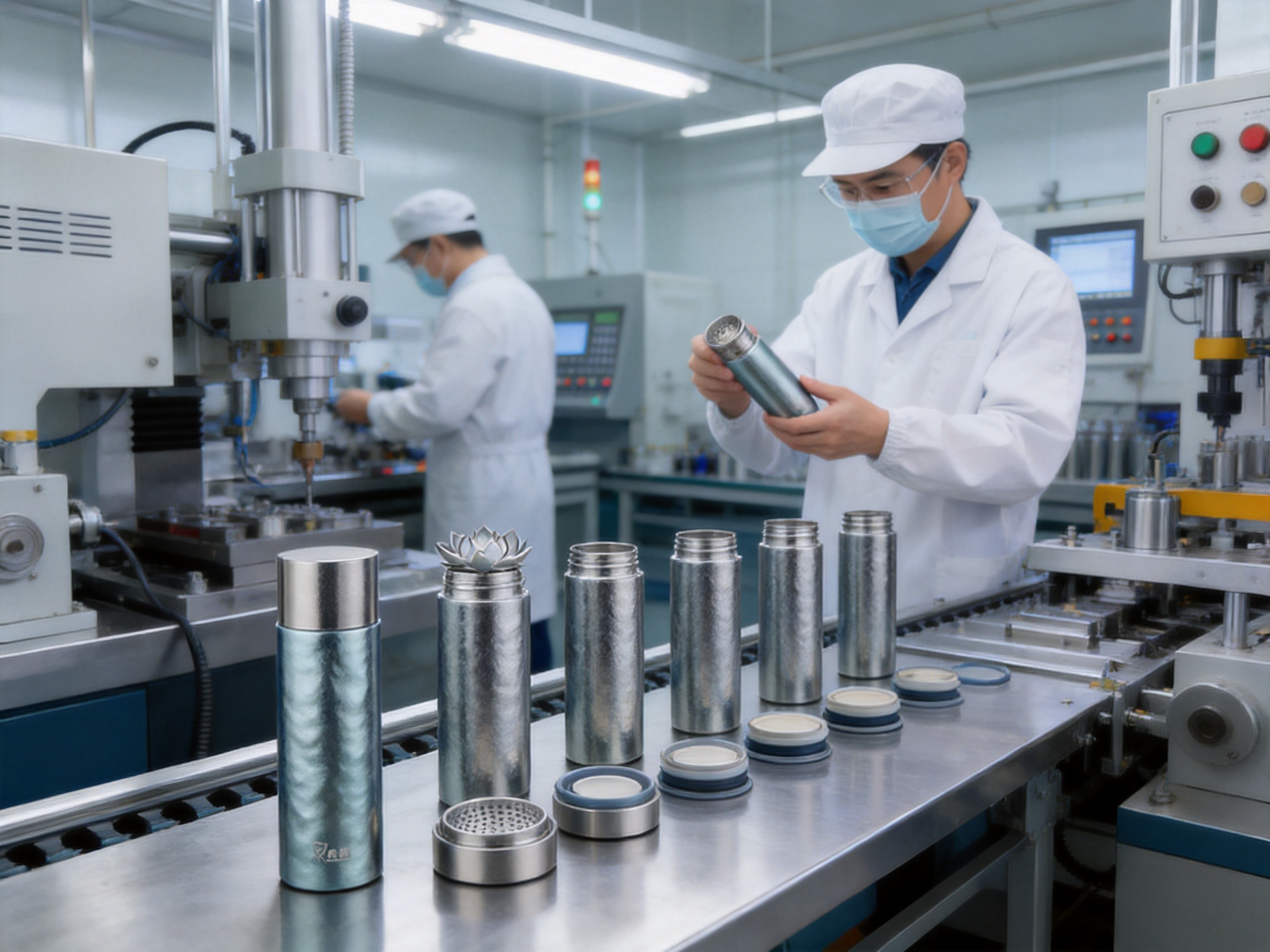
Behind the finished product is Heenoor Co., Ltd., a drinkware manufacturer with experience in product development, engineering validation, tooling development, standardized production, and quality management. The company’s capabilities in stainless steel, titanium, plastic, and glass drinkware support the development of products that are not only visually distinctive but also suitable for repeatable, large-volume manufacturing.
A Tea Flask Designed for Slow, Sealed Extraction
Many ordinary travel bottles are optimized only for carrying hot water. They may have a simple opening, a basic internal stopper, and no dedicated filtration structure. That arrangement can be inconvenient for tea preparation because leaves may float freely, over-extract, clog the drinking opening, or release sediment into the cup. The Pure Titanium Magnetic Stewed Tea Vacuum Flask takes a different approach by integrating brewing, sealing, filtering, and serving functions into one compact structure.
The flask is designed for long infusions in a sealed, high-temperature environment. This makes it particularly suitable for teas whose aroma and body develop gradually. Aged Pu-erh, aged white tea, and similar teas can require sustained heat to release deeper fragrance, mellow sweetness, and a fuller mouthfeel. The vacuum structure helps maintain temperature, while the filter mesh separates the brewed liquor from the leaves during pouring or drinking.
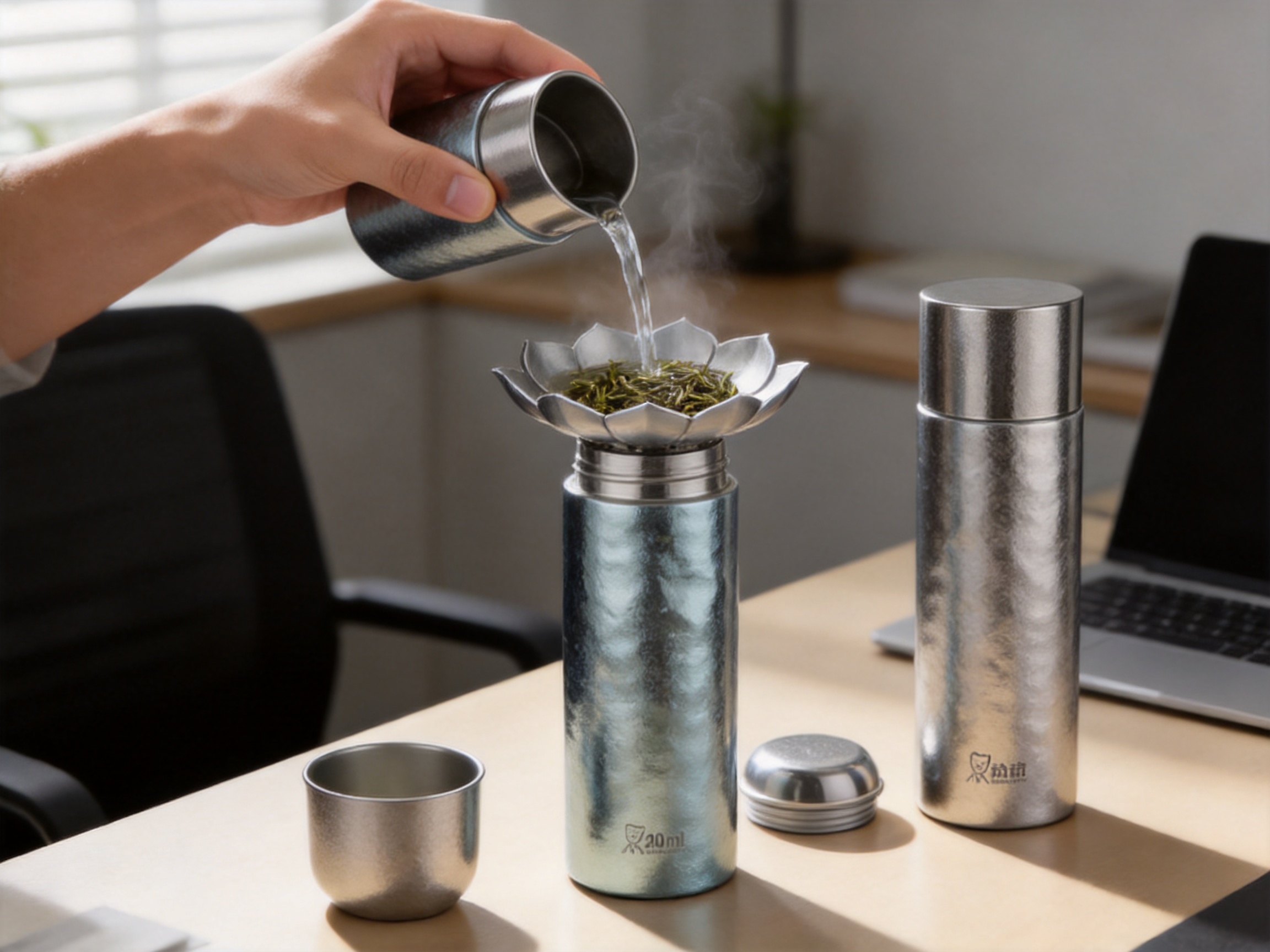
Instead of forcing users to carry a separate teapot, strainer, cup, and thermos, the product combines several pieces into a coordinated system. The lid can be used as a drinking cup, the inner lid includes a sealing ring, and the lotus-shaped filter screen retains tea leaves. This functional integration makes the flask suitable for home use, office tea service, outdoor gatherings, business travel, and personal daily routines.
TA1 Pure Titanium as the Core Material
The body and filter screen are made from TA1 pure titanium. The inner lid also uses TA1 titanium together with PP, a magnet, and silicone rubber. Titanium is valued in drinkware because it combines low weight, strength, and high resistance to corrosion. TA1 is a commercially pure titanium grade commonly selected for applications where chemical stability and corrosion resistance are important.
Tea contains naturally occurring acids, tannins, aromatic compounds, and mineral elements. Over time, contact with unsuitable materials may create unwanted odors, surface discoloration, or flavor interference. The use of pure titanium helps create a neutral contact environment for the brewed tea. The material is odorless under normal use and does not introduce a competing taste that could mask the tea’s natural aroma.
The corrosion resistance of titanium is also valuable for consumers who regularly prepare different kinds of tea. A vessel used for roasted tea one day and aged white tea the next should not retain strong flavors or become difficult to clean. Titanium’s chemically stable surface supports a more consistent sensory experience across different brewing cycles.
Another advantage is the balance between durability and portability. Titanium offers a strong structure without the weight associated with some heavier metal vessels. The 420 ml model weighs approximately 0.27 kg, while the 700 ml model weighs approximately 0.38 kg. These weights make the flask practical for carrying in a work bag, travel bag, or outdoor tea kit.
Why Material Selection Matters for Tea
Tea brewing is sensitive to temperature, time, water quality, and vessel material. A highly aromatic tea can be affected by residual smells from previous beverages. A material that is difficult to clean may also encourage the accumulation of tea stains or odors. TA1 pure titanium provides a smooth, stable foundation that supports repeated use and easier maintenance.
Compared with many ordinary plastic travel bottles, the titanium body offers greater resistance to heat and long-term wear. Compared with some common metal drinkware, it provides a premium lightweight alternative with strong corrosion resistance. Compared with glass, it offers greater resistance to accidental impact during travel and outdoor use. These comparisons do not eliminate the value of other materials, but they demonstrate why titanium is well suited to a premium, portable tea vessel.
Distinctive Crystallized Surface Treatment
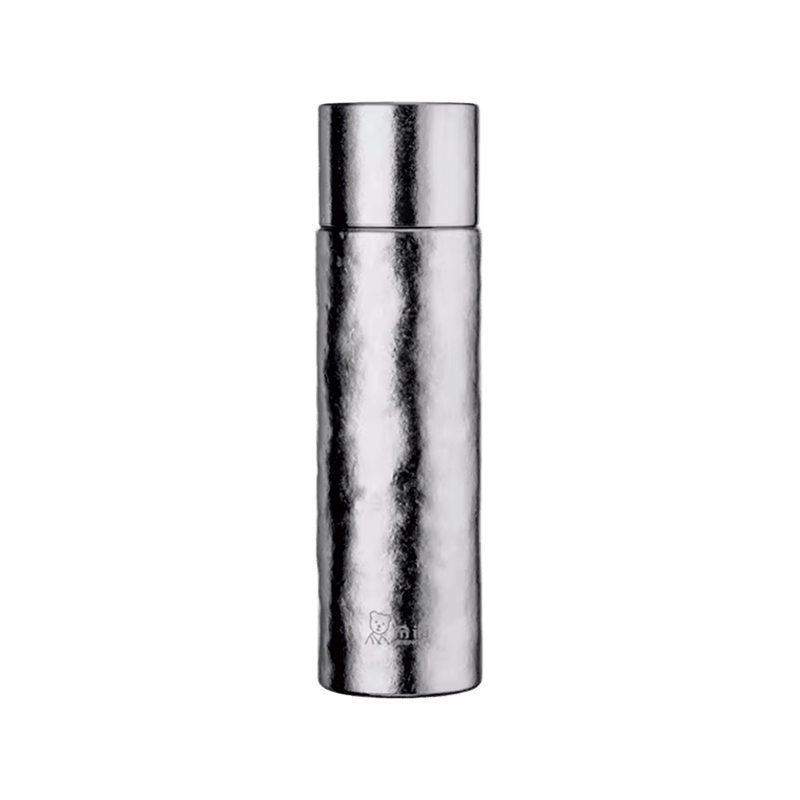
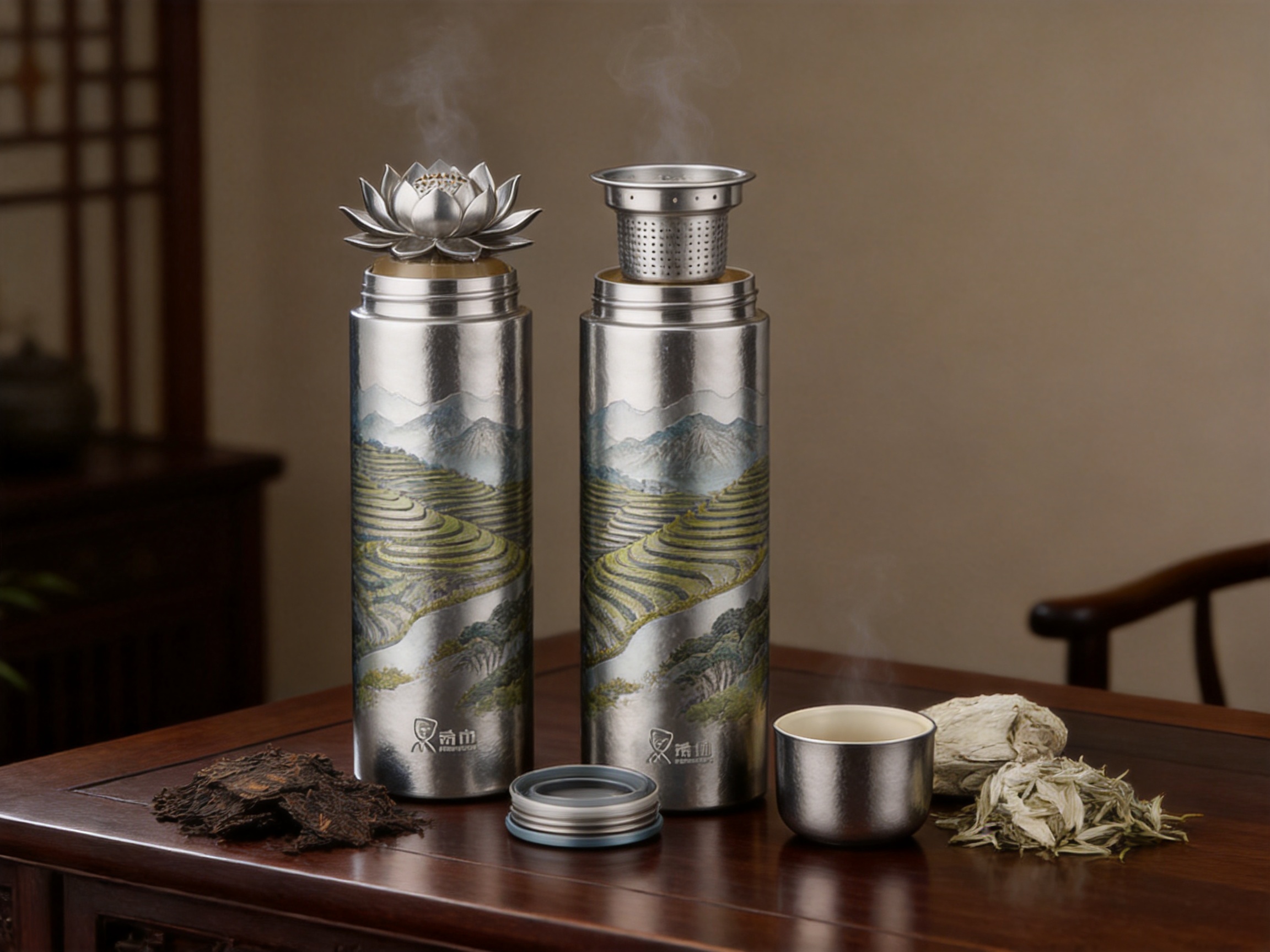
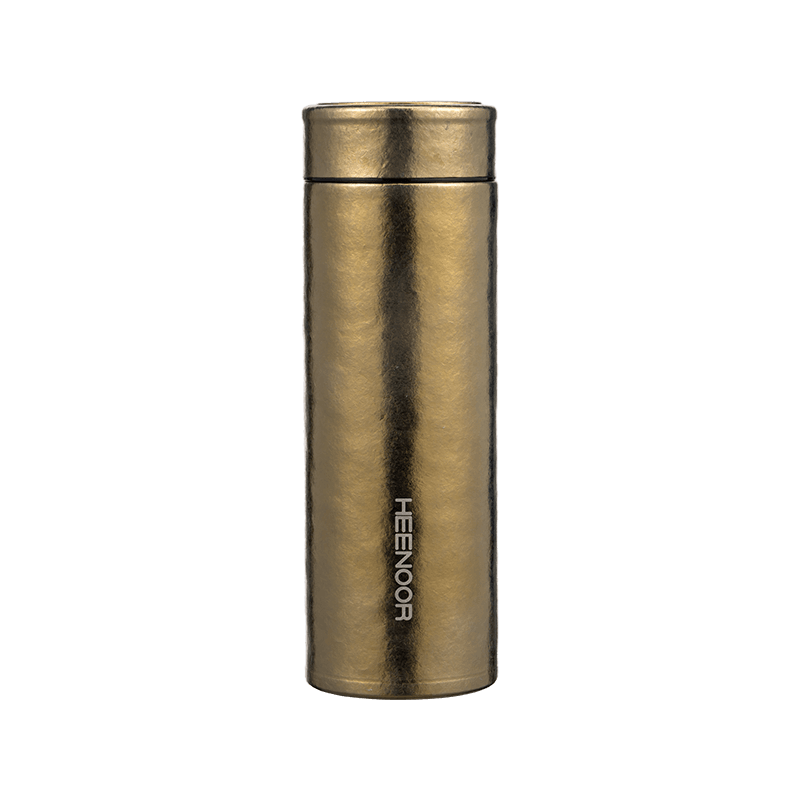
The exterior surface is treated with a patented crystallized pattern. The resulting texture resembles terraced fields, natural landscapes, or layered geological forms. This treatment gives the flask a visual identity beyond the plain cylindrical appearance common to many vacuum bottles.
The patterned surface supports two important product objectives. First, it creates a refined appearance appropriate for tea appreciation, gifting, and premium retail presentation. Second, the texture adds visual depth and helps distinguish the flask from mass-market drinkware with smooth, undecorated surfaces.
For a tea product, appearance is part of the user experience. Tea preparation often involves deliberate movements, careful pouring, and attention to aroma. A surface inspired by natural landscapes complements this ritual and reinforces the connection between tea culture and the natural world. The finish is therefore not merely decorative; it helps position the product as a dedicated tea accessory rather than a generic insulated bottle.
From a manufacturing perspective, a patterned surface also requires disciplined process control. The treatment must be applied consistently so that texture, visual balance, and surface quality remain stable across production batches. Product development, tooling validation, finishing control, and inspection are all important when a design relies on a recognizable surface pattern.
Pure Titanium Magnetic Stewed Tea Vacuum Flask
Magnetic Sealing and Dual-Purpose Lid Design
The inner lid contains a magnet and a silicone sealing ring. This combination provides a practical way to align and secure the lid while supporting a tight seal. The sealing structure is designed to prevent leakage even when the flask is inverted under normal closed conditions.
A reliable seal is particularly important for a tea flask because the contents are often hot and the product may be carried in a bag. Leakage can damage documents, electronic devices, clothing, or other personal items. The magnetic closing mechanism provides a clear tactile experience during assembly, while the silicone ring creates the flexible contact needed to close the opening effectively.
The lid also has a dual-purpose design. Once removed, it can be used directly as a tea cup. This feature eliminates the need to carry a separate cup for short tea sessions. It is useful in an office, at a campsite, during a business meeting, or when serving tea to one or two people during travel.
This multifunctional approach improves the product’s practical value. A conventional flask may require a separate cup, while a conventional teapot may require a separate storage container for transport. By incorporating a serving cup into the lid, the product reduces the number of accessories needed without compromising its compact format.
Attention to Sealing Components
Silicone rubber is used in the sealing ring and around the filter screen. The silicone components provide flexibility, help absorb contact pressure, and reduce the risk of hard-material impact between internal parts. The seal must be correctly dimensioned and installed to maintain reliable performance during repeated opening and closing.
For manufacturers, sealing components require careful control of material selection, dimensions, assembly position, and inspection standards. A sealing ring that is too loose may allow leakage, while one that is too tight may make opening inconvenient. Stable production processes help ensure that the user receives a consistent closing experience across different units.
Lotus-Shaped Filter Screen for Cleaner Brewing
The filter screen uses TA1 pure titanium and is formed in a lotus-inspired design. Its fine holes are intended to retain tea leaves while allowing brewed tea to pass through. The shape is visually aligned with tea culture and also contributes to the product’s identity as a dedicated tea-brewing vessel.
Fine filtration is important when brewing loose-leaf tea inside a portable flask. Without an effective filter, small leaves and fragments may enter the drinking area. The filter screen helps separate the leaves from the liquid, creating a cleaner drinking experience and allowing users to control extraction more effectively.
The edge of the filter screen is protected with a silicone ring. This ring helps reduce scratching or direct hard contact between the filter and the cup body. It also contributes to a more secure fit and supports the overall protection of the internal titanium surfaces.
The filter design is suitable for a wide range of loose-leaf teas, although tea particle size and leaf shape can affect filtration results. Larger leaves are generally easier to contain than very fine tea dust. Users can choose appropriate tea portions and avoid overfilling the filter to maintain good flow and balanced extraction.
Brewing Performance for Aged and Robust Teas
The Pure Titanium Magnetic Stewed Tea Vacuum Flask is especially appropriate for teas that benefit from sustained heat. Aged Pu-erh and aged white tea are examples of tea styles commonly associated with gradual extraction. Their aromas may develop through multiple stages, beginning with warm earthy notes and progressing toward deeper woody, honeyed, dried-fruit, or herbal impressions.
The sealed high-temperature environment supports a slower brewing method than a quick infusion in a small open cup. Once the tea and hot water are added, the user can allow the leaves to release their flavor over time. The vacuum structure helps limit rapid heat loss, giving the tea more time to develop before serving.
The result will depend on the tea, water temperature, leaf quantity, steeping duration, and personal preference. The flask does not replace the skill of the tea maker, but it provides a stable environment in which the user can experiment with these variables. For people who prefer a richer and smoother tea, long infusion may offer an attractive alternative to repeated short brews.
The product can also support practical workplace brewing. A user may prepare tea in the morning, allow it to infuse during a commute or work period, and serve it later without needing a complete tea table. The 420 ml size is suitable for individual consumption, while the 700 ml model provides more volume for extended use or sharing.
Suggested Brewing Method
Begin by rinsing the flask, filter, and lid with clean water. Add an appropriate amount of loose-leaf tea to the filter. The quantity should be adjusted according to the tea type and the desired strength. Aged and compressed teas may need to be loosened gently before brewing so that hot water can contact the leaves evenly.
Add hot water without exceeding the safe filling level. Place the filter and inner lid correctly, then secure the outer lid. Allow the tea to steep according to personal preference. For a first trial, a moderate steeping period is recommended so that the user can evaluate the strength before increasing the time.
When serving, remove the lid carefully and use it as a cup if desired. Pour through the filter structure or drink in a controlled manner, depending on the intended use. After use, empty the tea leaves promptly, rinse the internal components, and allow them to dry fully before storage.
| Specification | 420 ml Model | 700 ml Model |
|---|---|---|
| Model | XN-T355 | XN-T380 |
| Capacity | 420 ml | 700 ml |
| Approximate Weight | 0.27 kg | 0.38 kg |
| Filter Screen | TA1 Pure Titanium and Silicone Rubber | TA1 Pure Titanium and Silicone Rubber |
| Cup Body | TA1 Pure Titanium | TA1 Pure Titanium |
| Inner Lid | TA1 Pure Titanium, PP, Magnet, and Silicone Rubber | TA1 Pure Titanium, PP, Magnet, and Silicone Rubber |
| Outer Lid | TA1 Pure Titanium and Iron | TA1 Pure Titanium and Iron |
Advantages Over Conventional Tea and Drinkware Options
The product’s primary advantage over a standard water bottle is its dedicated tea-brewing structure. A standard bottle may transport hot water effectively, but it often lacks an integrated filter, a tea-oriented lid, and a system designed for prolonged steeping. The Pure Titanium Magnetic Stewed Tea Vacuum Flask is built around the complete tea-use scenario.
Compared with a conventional glass teapot, the flask is more portable and less vulnerable to breakage during transport. The vacuum structure also offers a practical way to preserve heat for longer periods. Glass remains valuable for visual appreciation of tea color, but titanium is advantageous when mobility and durability are priorities.
Compared with a separate teapot and thermos combination, the product reduces the number of items required. The filter, sealing components, body, and serving lid are integrated into one coordinated product. This simplified format is useful for outdoor tea gatherings, office use, travel, and compact kitchens.
Compared with ordinary stainless steel drinkware, TA1 pure titanium offers a different balance of weight, corrosion resistance, chemical stability, and premium positioning. Stainless steel remains a widely used and practical material, but titanium can provide a lighter and more specialized alternative for consumers who place high value on material purity and tea neutrality.
Compared with uninsulated tea cups, the vacuum flask provides a better solution for users who want to maintain heat during longer brewing periods. The insulation also makes the product more appropriate for commuting, outdoor use, and situations where the tea cannot be consumed immediately after preparation.
Functional Integration as a Competitive Strength
The product’s competitive value comes from how its features work together. Titanium provides the material foundation. Vacuum insulation supports temperature retention. The magnetic inner lid and silicone ring address closure and leakage. The lotus-shaped filter manages tea leaves. The removable lid creates a serving cup. The crystallized surface gives the product a distinctive visual identity.
Any single feature can be found in other types of drinkware, but the combination is less common. A bottle may have insulation but no filter. A teapot may have a filter but no travel seal. A cup may be attractive but offer no extended heat retention. The integrated design gives the product a focused position between a portable thermos, a personal teapot, and a serving vessel.
Manufacturing Capabilities Supporting Product Reliability
Heenoor Co., Ltd. was founded in 1999 and has developed experience in product design, engineering validation, tooling development, standardized production, and quality management. These capabilities are important for a complex drinkware product because product performance depends not only on the selection of materials but also on the accuracy of forming, fitting, assembly, and inspection.
The company works with stainless steel, titanium, plastic, and glass drinkware. This multi-material experience allows engineering teams to evaluate how different materials should be used in the body, lid, filter, seal, and accessory systems. The Pure Titanium Magnetic Stewed Tea Vacuum Flask itself illustrates this coordinated approach: TA1 titanium is used where chemical stability and lightweight durability are important, PP supports the inner lid structure, magnets contribute to closure, and silicone rubber provides flexible sealing and protection.
Product development begins with understanding the intended application. For this flask, the application includes long tea infusion, portability, heat retention, leak resistance, filtration, and direct serving. Each requirement influences the shape of the body, the fit of the filter, the design of the lid, the selection of sealing materials, and the expected production tolerances.
Product Design and Engineering Validation
Product design must translate the tea-brewing concept into a structure that can be manufactured consistently. The engineering team must consider how the body, filter, inner lid, outer lid, magnet, and silicone components interact. The design should support user-friendly assembly while minimizing opportunities for incorrect fitting.
Engineering validation may include evaluation of closure alignment, seal performance, component fit, thermal behavior, surface appearance, and repeated-use durability. For a product intended for hot liquids, the relationship between material expansion, sealing pressure, and component stability deserves particular attention.
Validation is also important for the magnetic mechanism. The magnet must be securely integrated into the inner lid and positioned so that it supports closure without interfering with cleaning or normal use. The lid should remain convenient to remove while providing a clear closing action.
The filter system requires its own validation. Hole size, filter shape, edge protection, and position within the cup body influence both filtration and liquid flow. The silicone ring must protect the cup without preventing the filter from seating properly. These details demonstrate why engineering validation is essential before standardized production begins.
Tooling Development and Process Control
Tooling development supports repeatable production of the body, lid, filter, and other formed components. Precision tooling helps control dimensions, surface transitions, fit relationships, and visual consistency. When the exterior includes a crystallized pattern, tooling and finishing methods must be coordinated to preserve the intended appearance across production runs.
Tooling is not only a production expense; it is also a quality foundation. Well-developed tooling can reduce variation, improve assembly efficiency, and support predictable inspection results. For a product with multiple interlocking components, dimensional stability is especially important because small deviations may affect sealing, filter placement, or lid operation.
Standardized production procedures help transform the validated design into a repeatable manufacturing program. These procedures can cover material preparation, forming, surface treatment, component assembly, sealing-ring installation, magnet placement, cleaning, inspection, and packaging. Consistency at each stage contributes to the finished product’s reliability.
Quality Management Across Multiple Materials
Quality management for a titanium tea flask must address more than the appearance of the cup body. It must also consider the purity and condition of titanium parts, the accuracy of filter openings, the installation of silicone rings, the security of the magnet, the fit of the PP component, and the performance of the vacuum structure.
Incoming material control helps ensure that titanium, plastic, silicone, magnets, and other materials meet defined requirements. In-process inspection can identify dimensional deviations before they affect final assembly. Finished-product inspection can evaluate appearance, sealing, component operation, and packaging condition.
A multi-stage quality approach is valuable for large-volume drinkware programs. It reduces dependence on final inspection alone and encourages earlier detection of problems. This approach supports more stable delivery, lower rework risk, and clearer communication between product development, manufacturing, and procurement teams.
Scalable Manufacturing for Brand and Procurement Programs
For brands and organizations purchasing drinkware in volume, product quality is only one part of the decision. Supply stability, manufacturing capacity, engineering communication, documentation, and production discipline are equally important. A product may perform well in a small sample batch but fail to meet expectations if the manufacturing process cannot maintain consistency at scale.
Heenoor’s manufacturing model integrates product design, engineering validation, tooling development, standardized production, and quality management. This integrated structure can support projects that require coordination from early concept development through repeat orders. It is especially relevant to buyers seeking a long-term manufacturing partner rather than a one-time trading arrangement.
The company’s experience across multiple drinkware materials also supports product diversification. A buyer may require titanium tea flasks for a premium line, stainless steel vacuum bottles for general use, glass products for visual presentation, or plastic components for lightweight applications. A manufacturer with knowledge of these material categories can help organize product families while maintaining appropriate engineering standards for each one.
For procurement teams, the Pure Titanium Magnetic Stewed Tea Vacuum Flask can serve as a premium product within a broader drinkware portfolio. The 420 ml and 700 ml capacities provide options for individual and shared use. The differentiated surface treatment and tea-specific functions can also help a brand create a more distinctive offering than a generic insulated bottle.
Applications in Daily Life and Professional Settings
Home Tea Enjoyment
At home, the flask provides a compact method for preparing tea without setting up a full tea table. The user can brew a suitable loose-leaf tea, allow it to steep, and use the lid as a cup. The design is appropriate for quiet personal tea sessions as well as informal service to guests.
Office and Business Use
In an office, the flask can support tea preparation at a desk, in a meeting room, or in a shared refreshment area. Its sealed structure makes it more practical than an open teapot when the user needs to move between rooms or carry the tea from home. The removable lid reduces the need for disposable cups.
Outdoor Tea Gatherings
For outdoor tea gatherings, portability is a major advantage. The flask’s weight and compact structure make it easier to include in a travel kit. Titanium construction provides a durable option for situations where glass may be inconvenient. Users can prepare and serve tea with fewer separate items, which simplifies packing.
Travel and Gifting
The combination of premium material, distinctive surface treatment, and multifunctional design makes the flask suitable for gifting. It can appeal to tea enthusiasts, business partners, corporate programs, and specialty retailers. The two capacity options allow purchasers to match the product to different user preferences.
Care, Cleaning, and Long-Term Use
Proper care helps preserve the product’s appearance and performance. After brewing, tea leaves should be removed from the filter rather than left inside for extended periods. The body, filter, inner lid, outer lid, and silicone components should be rinsed with clean water and allowed to dry before reassembly.
Users should pay particular attention to the filter mesh and sealing ring. Tea particles may collect around fine filter openings, while residue may accumulate near the silicone seal if the components are not rinsed thoroughly. Periodic gentle cleaning helps maintain flow and sealing performance.
Harsh abrasives should be avoided when cleaning the crystallized surface because aggressive scrubbing may affect the finish. The magnetic inner lid should also be handled carefully during disassembly and cleaning so that the magnet and surrounding components remain secure.
Because the flask is intended for hot liquids, users should open it carefully after prolonged steeping. Internal pressure, hot liquid, and steam may be present. The product should be filled responsibly, with sufficient space left to support safe closure and handling. The flask should not be used for purposes outside its intended drinkware application.
Why This Product Is Suitable for Premium Drinkware Lines
Premium drinkware is often defined by the combination of material quality, functional detail, visual identity, and manufacturing reliability. The Pure Titanium Magnetic Stewed Tea Vacuum Flask addresses all four areas. TA1 pure titanium provides a high-value material foundation. The magnetic lid, filter system, vacuum insulation, and removable cup add meaningful functionality. The crystallized pattern creates a recognizable appearance. Heenoor’s integrated manufacturing capabilities support repeatable production.
The product also responds to a broader shift toward specialized drinkware. Consumers are increasingly interested in products designed for particular beverages and routines. Rather than using one generic bottle for water, coffee, and tea, some users prefer vessels that respect the specific preparation requirements of each drink. A dedicated tea flask can therefore occupy a distinct position in a premium lifestyle, wellness, hospitality, or giftware collection.
For brands, this specialization creates opportunities for targeted marketing and product storytelling. The flask can be presented as a tool for slow tea appreciation, a lightweight titanium travel companion, an office brewing solution, or a refined gift for tea enthusiasts. Its multiple functions support several market narratives without changing the underlying product.
Q&A
What is the main material of the flask?
The cup body is made from TA1 pure titanium. The filter screen also uses TA1 pure titanium with silicone rubber protection. The inner lid combines TA1 titanium, PP, a magnet, and silicone rubber, while the outer lid uses TA1 titanium and iron.
Why is titanium suitable for tea drinkware?
TA1 pure titanium is lightweight, corrosion resistant, chemically stable, and odorless under normal use. These qualities help preserve the natural aroma of tea and support repeated use with different tea varieties.
What types of tea are most suitable for this flask?
The product is particularly suitable for Pu-erh, aged white tea, and other teas that benefit from high-temperature, longer-duration extraction. Users can also experiment with other loose-leaf teas according to personal preference.
Can the lid be used as a cup?
Yes. The lid has a dual-purpose design and can be removed for direct use as a tea cup. This reduces the need to carry an additional serving cup.
How does the magnetic lid work?
The inner lid contains a magnet that supports alignment and closure. A silicone sealing ring helps create a tight seal and is designed to prevent leakage when the flask is properly closed, including when it is inverted under normal conditions.
Does the flask include a tea filter?
Yes. It includes a lotus-shaped filter screen with fine holes. The filter is designed to retain tea leaves while allowing brewed tea to pass through. A silicone ring protects the edge and helps reduce scratching inside the cup body.
What capacities are available?
The flask is available in 420 ml and 700 ml capacities. The corresponding models are XN-T355 and XN-T380.
How much do the two models weigh?
The 420 ml model weighs approximately 0.27 kg, and the 700 ml model weighs approximately 0.38 kg.
Is the product suitable for travel?
Yes. Its vacuum structure, compact format, integrated filter, and lid-cup design make it suitable for travel, office use, outdoor tea gatherings, and everyday carrying. Users should still confirm that the lid is fully secured before placing the flask in a bag.
What gives the exterior its distinctive appearance?
The surface uses a patented crystallized pattern that creates natural textures reminiscent of terraced fields and landscapes. This gives the product a more distinctive appearance than a plain cylindrical flask.
What manufacturing capabilities support the product?
Heenoor Co., Ltd. integrates product design, engineering validation, tooling development, standardized production, and quality management. The company has experience with titanium, stainless steel, plastic, and glass drinkware.
Is this product suitable for large-volume purchasing?
The product is designed within a manufacturing system intended to support reliable, large-volume drinkware programs. Brands and procurement teams can evaluate the available models for premium retail, corporate gifting, hospitality, and specialty tea applications.
Conclusion
The Pure Titanium Magnetic Stewed Tea Vacuum Flask is a specialized drinkware product built around the complete tea experience. Its TA1 pure titanium body provides a lightweight, corrosion-resistant, and chemically stable foundation. The vacuum structure supports prolonged hot brewing, while the lotus-shaped filter helps separate tea leaves from the finished beverage. The magnetic inner lid and silicone seal contribute to leak resistance, and the removable lid offers the convenience of a built-in tea cup.
Its crystallized surface treatment gives the flask a distinctive visual character, helping it stand apart from ordinary travel bottles and conventional thermoses. The combination of material performance, tea-specific functionality, portability, and refined appearance makes it suitable for personal use, office service, outdoor tea gatherings, gifting, and premium drinkware programs.
Equally important, the product is supported by a manufacturer with experience across design, engineering, tooling, standardized production, and quality management. Heenoor Co., Ltd. provides a manufacturing foundation suited to brands and procurement teams that require technical clarity, material expertise, scalable production, and long-term supply stability.
For users who value the aroma of aged tea and want a compact vessel for slow, sealed extraction, this flask offers a practical and elegant solution. For businesses seeking a differentiated titanium drinkware product, it provides a combination of functional integration and premium positioning that is difficult to achieve with a basic insulated bottle.
References
1. Product specification materials for the Pure Titanium Magnetic Stewed Tea Vacuum Flask, including models XN-T355 and XN-T380.
2. Technical information regarding TA1 commercially pure titanium and its use in corrosion-resistant consumer products.
3. General principles of vacuum-insulated drinkware design and thermal retention.
4. General principles of loose-leaf tea filtration, infusion time, and high-temperature brewing.
5. Manufacturing and quality-management principles for multi-material drinkware production.
6. Company information and manufacturing capability materials supplied for Heenoor Co., Ltd.
Product: Pure Titanium Magnetic Stewed Tea Vacuum Flask

You may also like…
Copyright © 2025 Heenoor Co., Ltd. All Rights Reserved.
 Custom Stainless Steel Drinkware Manufacturers
BACK TOP