 English
 中文简体
中文简体 日本語
日本語 Español
 عربى
عربى
Search
Categories
Recommend
Categories
 Lin Yuxi — International Product Sales Manager
Recommend
-
 Industry news
 -
 Industry news
 -
 Industry news
 -
 Industry news
Sep 22, 2026 - By admin
Advanced Stainless Steel Tea Water Separation Stewing Teakettle for Modern Beverage Service
Content
- 1 Product Overview and Core Design Concept
- 2 304 Stainless Steel Inner Liner for Safe and Reliable Use
- 3 Vacuum Insulation and Temperature Retention
- 4 Tea Water Separation for Controlled Brewing
- 5 One-Touch Dispensing for Everyday Convenience
- 6 Covered Spout and Reinforced Base
- 7 Capacity Options for Different Usage Scenarios
- 8 Advantages Over Basic and Competing Beverage Containers
- 9 Applications in Homes, Offices, and Outdoor Settings
- 10 Manufacturing Capabilities and Industrial Process
- 11 From Material Preparation to Finished Kettle
- 12 Quality Control Priorities
- 13 Why Integrated Manufacturing Benefits Buyers
- 14 Care, Cleaning, and Long-Term Performance
- 15 Purchasing Considerations for Wholesale and Custom Programs
- 16 Frequently Asked Questions
- 16.1 What type of product is this?
- 16.2 What materials are used for the inner liner and filter?
- 16.3 What capacities are available?
- 16.4 Can the kettle be used for cold beverages?
- 16.5 What is the purpose of the filter screen?
- 16.6 How does the one-touch dispensing system work?
- 16.7 What is the function of the pull-to-open lid?
- 16.8 Where can the kettle be used?
- 16.9 Why is 304 stainless steel suitable for this product?
- 16.10 Does vacuum insulation mean the beverage will remain at exactly the same temperature?
- 16.11 How should the filter and lid be cleaned?
- 16.12 What manufacturing capabilities support this product?
- 16.13 Can the product be considered for a custom drinkware program?
- 17 Conclusion
- 18 References
- 19 Product: Stainless Steel Tea Water Separation Stewing Teakettle
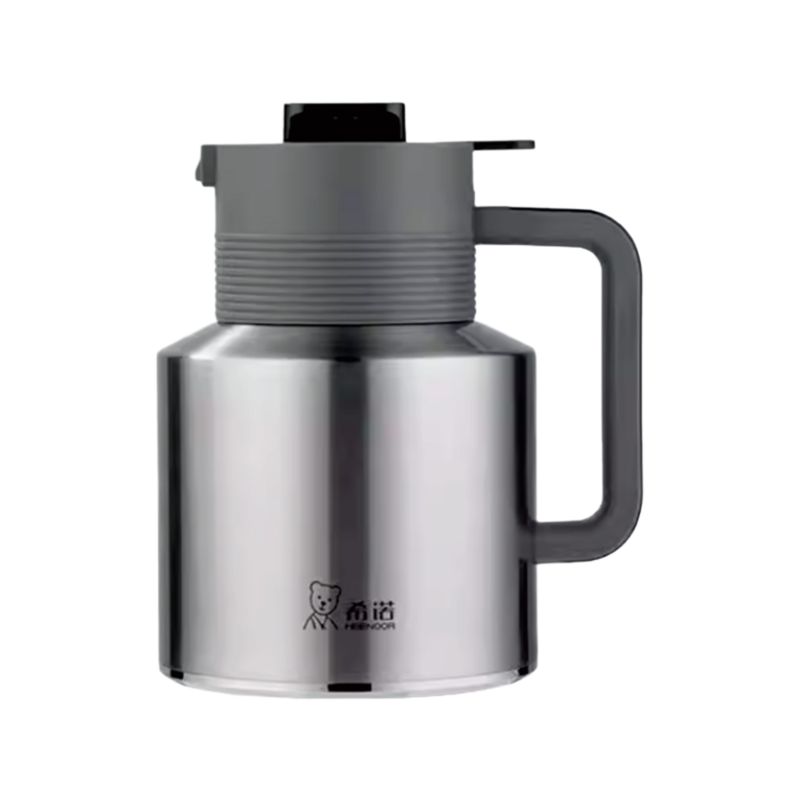
Choosing the right beverage container involves more than selecting a suitable capacity or attractive appearance. For homes, offices, hospitality environments, and outdoor activities, a high-quality kettle must preserve temperature, support safe daily use, dispense smoothly, resist wear, and remain convenient after repeated operation. The Stainless Steel Tea Water Separation Stewing Teakettle is designed around these practical requirements. It combines a 304 stainless steel inner liner, vacuum insulation, an integrated filter screen, a one-touch dispensing system, a pull-to-open lid, and a reinforced base in one functional product.
Available in 1.6-liter and 1.1-liter configurations, the kettle provides a useful balance between capacity and handling. The larger model is suitable for group service, family use, and office gatherings, while the smaller model is easier to position in compact kitchens, conference rooms, and personal workspaces. Both versions are developed for hot and cold beverages, allowing users to prepare tea, coffee, infused water, and other drinks without needing separate containers for different seasons.
Its principal value lies in the way several design features work together. The stainless steel liner provides a durable and hygienic beverage-contact surface. The vacuum layer slows heat transfer. The filter screen supports tea and water separation. The dispensing button permits one-handed operation, and the covered spout helps reduce exposure to dust and dirt. Instead of focusing on a single feature, the product offers a coordinated solution for beverage storage, serving, and everyday handling.
Product Overview and Core Design Concept
The product is a stainless steel vacuum kettle developed for tea preparation, beverage storage, and controlled serving. Its design is especially appropriate for users who prefer to steep tea inside the kettle while keeping leaves, particles, or other ingredients separated from the poured beverage. This makes it practical for routine use at home and in workplaces where tea may be prepared in advance and served gradually.
The model family includes XN-8851 and XN-8852. XN-8851 has a capacity of 1.6 liters and a weight of approximately 1.1 kilograms. XN-8852 has a capacity of 1.1 liters and a weight of approximately 0.88 kilograms. Both models use a 304 stainless steel inner liner and a 304 stainless steel filter screen. The lid combines 304 stainless steel with PP and PC components, creating a structured closure and dispensing assembly that balances durability, mechanical function, and product weight.
The phrase “tea water separation” describes the functional arrangement that allows tea ingredients to remain controlled while liquid is poured. This is useful for loose-leaf tea, herbal infusions, and other beverages in which continued contact with the ingredients may eventually produce excessive strength or bitterness. By supporting separation during service, the kettle can help users manage the drinking experience more precisely.
In addition to tea preparation, the product can serve as a general vacuum beverage container. Hot water can be stored for later use, while chilled drinks can be kept cool during meals, meetings, or outdoor activities. Its dual-temperature function makes it a versatile alternative to products designed only for hot drinks or only for cold water.
Stainless Steel Tea Water Separation Stewing Teakettle
304 Stainless Steel Inner Liner for Safe and Reliable Use
The inner liner is one of the most important parts of any beverage container because it comes into direct contact with water, tea, coffee, and other drinks. This model uses 304 stainless steel for the liner. The material is widely recognized for its corrosion resistance, rust resistance, strength, and suitability for food and beverage applications when properly manufactured and maintained.
A stainless steel liner offers important practical advantages over materials that may be more vulnerable to staining, impact damage, or odor retention. It provides a solid interior surface that is suitable for repeated use and routine cleaning. Because beverage containers are often exposed to hot water, acidic ingredients, mineral deposits, and repeated washing, resistance to corrosion is essential for maintaining long-term usability.
The neutral character of stainless steel also helps preserve the original taste of beverages. A well-finished metal interior is less likely to retain the flavor of a previous drink than porous or heavily absorbent surfaces. This is particularly beneficial when a user alternates between tea, plain water, coffee, and infused beverages.
Material selection is only one part of product safety and performance. Manufacturing accuracy, surface finishing, weld quality, cleaning procedures, assembly control, and inspection all influence the final result. A properly formed liner must be fitted into the vacuum body with controlled dimensions and consistent alignment. The opening, sealing area, filter interface, and lid connection must work together without creating unnecessary gaps or unstable contact points.
The use of 304 stainless steel for the filter screen further supports material consistency in the beverage-contact system. When the liner and filter are made from the same general stainless steel grade, the product has a coherent material platform for tea preparation and serving. The filter can be repeatedly exposed to water and tea without relying on a fragile disposable component.
Vacuum Insulation and Temperature Retention
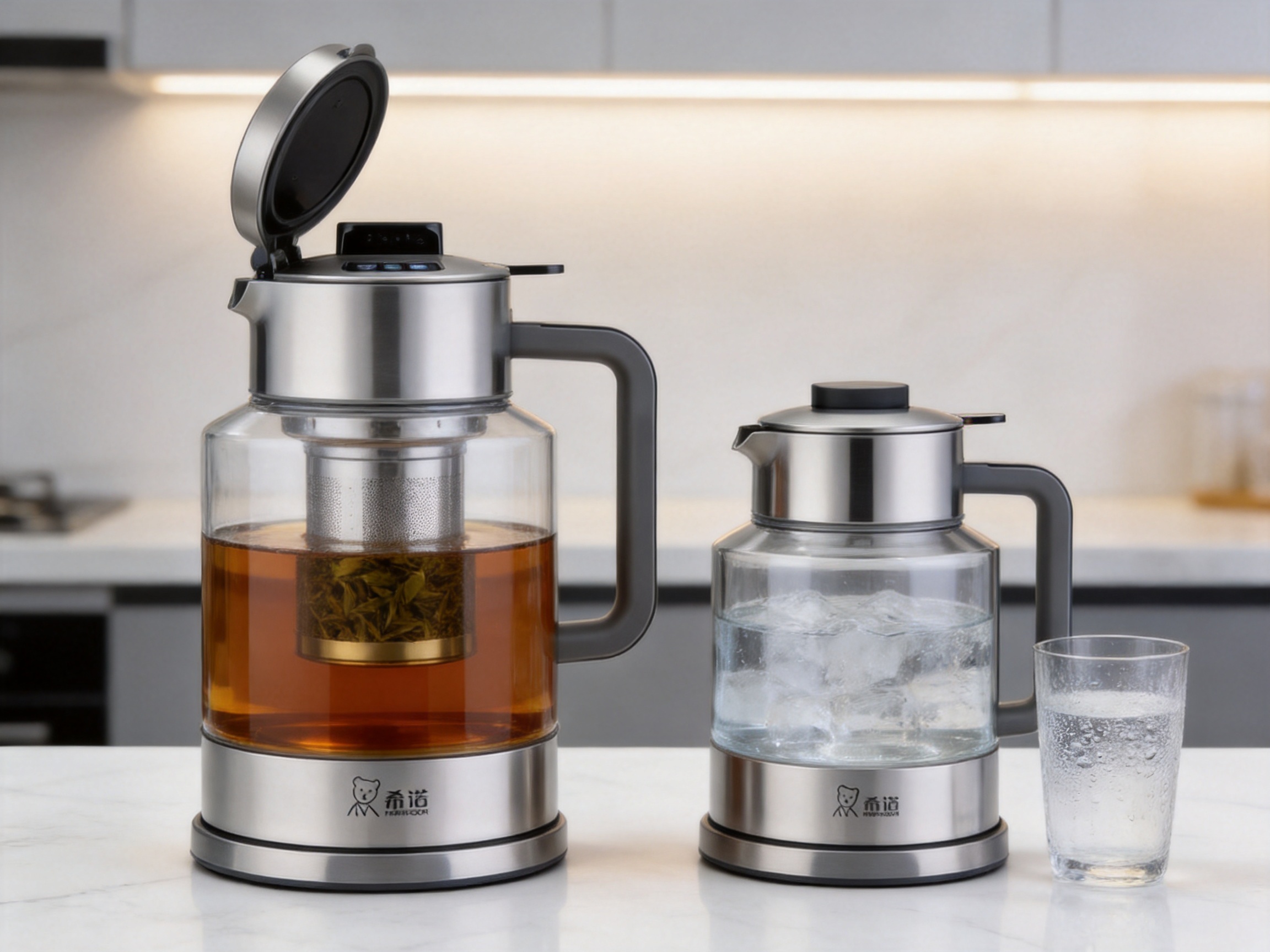
The body of the kettle uses vacuum insulation technology to slow the transfer of heat between the beverage and the external environment. In a conventional single-wall container, heat can move through the material and surrounding air relatively easily. A vacuum layer reduces gaseous heat transfer, helping the product retain the temperature of hot or cold beverages for longer than a basic non-insulated vessel.
The insulation system is designed to support both hot and cold applications. In winter, it can help keep tea, hot water, and other warm beverages at a more useful serving temperature. In summer, it can slow warming of chilled water or cold drinks. This dual function improves the product’s value because the same kettle can be used throughout the year rather than being limited to a single beverage season.
Vacuum performance depends on the quality of the inner and outer body construction, the stability of the sealed space, and the consistency of the manufacturing process. Any weakness in the vacuum chamber, sealing area, or structural connection may reduce thermal performance. For this reason, vacuum drinkware production requires more than metal forming. It also requires controlled evacuation, sealing, dimensional inspection, and performance verification.
The product’s sealed structure works with the vacuum layer to reduce heat loss. The lid and dispensing assembly are important because the opening is a potential path for temperature exchange. A well-designed lid helps limit unnecessary exposure when the kettle is not being used, while the one-touch dispensing button allows the user to pour without removing the complete lid assembly.
Although vacuum insulation is not intended to replace refrigeration or heating equipment, it provides a convenient passive method of temperature management. Users can prepare a beverage, close the kettle, and serve it progressively without transferring it immediately into another container. This saves time and reduces the need for repeated reheating or cooling during ordinary daily activities.
Tea Water Separation for Controlled Brewing
Tea preparation often involves a balance between steeping and separation. Tea leaves need contact with hot water to release aroma, flavor, and color, but prolonged contact can produce an overly strong or bitter drink. The integrated 304 stainless steel filter screen is designed to support this balance by helping separate tea ingredients from the liquid during pouring.
This function is useful for loose-leaf tea, flower tea, herbal blends, and other infusions with particles that users may prefer not to drink directly. The filter can help limit the movement of larger ingredients into the serving stream while allowing liquid to pass through. The exact result depends on the size and form of the ingredients, but the overall concept provides more control than pouring directly from an unrestricted container.
Tea separation also contributes to a cleaner serving experience. Users do not need to place a separate strainer over every cup, which can be inconvenient during meetings or group service. The kettle integrates preparation and serving into one product, reducing the number of accessories required at the table or in the office.
The filter screen should be cleaned after use, especially when tea leaves, herbs, or fine particles have been steeped for an extended period. Routine cleaning helps prevent buildup and supports smooth water flow. The stainless steel construction is suitable for repeated washing, while the removable or accessible design of the filter area should be considered when establishing a cleaning routine.
One-Touch Dispensing for Everyday Convenience
The one-touch water dispensing button is designed for simple one-handed operation. This is a meaningful advantage in daily use because the user can hold a cup with one hand and operate the kettle with the other, or place the kettle on a stable surface and dispense with minimal effort. The mechanism is particularly helpful during office meetings, family meals, and situations where the other hand is occupied.
Many traditional kettles require users to remove the entire lid before pouring. That arrangement may expose the beverage to dust, increase the chance of spills, and require two-handed handling. A dispensing button reduces the number of steps between storage and serving. It also helps keep the main opening closed during normal use, supporting cleanliness and thermal retention.
The button is integrated into the lid structure, where mechanical alignment is important. A reliable dispensing system depends on stable spring or valve action, accurate component fit, suitable sealing surfaces, and consistent assembly. If the components are not properly aligned, the button may feel loose, fail to open fully, or permit leakage. Controlled production and functional testing are therefore essential parts of the product’s manufacturing process.
The dispensing path should also be designed to support smooth liquid movement. The product’s spout includes a hole design intended to help prevent dust and dirt from entering while allowing water to flow without excessive splashing. A balanced relationship between spout geometry, outlet size, internal pressure, and pouring angle can improve the user experience.
Covered Spout and Reinforced Base
The spout is a small component with a significant effect on product usability. A poorly designed spout may drip, splash, or expose the beverage unnecessarily. This kettle uses a covered hole design at the spout area to help reduce contamination from external dust and dirt. The structure is intended to maintain a cleaner outlet while supporting smooth water flow.
Smooth flow is important when serving hot tea because uncontrolled splashing can create a safety concern. It is also important for office and dining environments where a clean table surface is expected. A controlled stream helps users fill cups more accurately and reduces the chance of liquid running down the exterior of the kettle.
The base is reinforced to improve stability, durability, and resistance to wear. A beverage kettle may be placed on kitchen counters, desks, dining tables, outdoor surfaces, and other locations throughout its service life. A stable base helps prevent tipping and protects the lower structure from repeated contact with hard surfaces.
Reinforcement is particularly valuable for larger-capacity products. When filled, the 1.6-liter model contains a substantial amount of liquid, increasing the load on the base and the user’s handling points. A well-supported bottom distributes this load and helps the kettle remain steady during storage and dispensing.
The base also contributes to the product’s overall visual and structural finish. It should be properly fitted to the body, free from sharp edges, and compatible with the intended surface. Production inspection can verify alignment, attachment, surface condition, and stability before the kettle is packed for shipment.
Capacity Options for Different Usage Scenarios
Capacity selection affects convenience, portability, serving frequency, and storage requirements. The product is offered in two practical sizes, allowing buyers to select a configuration according to their application.
| Model | Capacity | Weight | Inner Liner | Filter Screen | Lid Material |
|---|---|---|---|---|---|
| XN-8851 | 1.6L | 1.1kg | 304 Stainless Steel | 304 Stainless Steel | 304 Stainless Steel + PP + PC |
| XN-8852 | 1.1L | 0.88kg | 304 Stainless Steel | 304 Stainless Steel | 304 Stainless Steel + PP + PC |
The 1.6-liter version is suitable for shared consumption. It can provide multiple servings during a family breakfast, office meeting, reception area, or outdoor gathering. Its larger capacity reduces the need for repeated refilling, which is useful when users want to prepare tea or hot water in advance.
The 1.1-liter version offers a more compact alternative. It is appropriate for smaller households, individual workstations, compact kitchens, and users who prefer a lighter product. At approximately 0.88 kilograms before filling, it is easier to lift and reposition than the larger model while still providing meaningful storage capacity.
Capacity should be selected according to the number of users, serving frequency, available storage space, and expected carrying distance. A larger model is not automatically better if the product will mainly be used by one person. Similarly, a smaller model may require too many refills in a busy office or family environment. Offering both configurations allows a procurement team to match the product more closely to actual needs.
Advantages Over Basic and Competing Beverage Containers
The kettle provides several advantages when compared with basic non-insulated pitchers, ordinary teapots, and single-purpose drink containers. Its competitive strength comes from the combination of functions rather than from one isolated specification.
First, the vacuum-insulated body provides temperature management that a conventional single-wall pitcher cannot offer. A basic pitcher may be suitable for immediate serving, but it does not provide the same ability to preserve hot or cold conditions over an extended period. The vacuum structure helps users prepare beverages in advance and serve them gradually.
Second, the 304 stainless steel liner offers a durable beverage-contact surface. Some alternative containers may be more vulnerable to cracking, staining, odor retention, or impact damage. Stainless steel is well suited to repeated use, especially in environments where a product must be handled frequently and cleaned regularly.
Third, the integrated tea filter reduces the need for separate straining equipment. A traditional teapot may require an additional strainer or may allow tea leaves to remain in contact with the liquid until the final cup is poured. The separation function provides a more organized approach to loose-leaf tea preparation.
Fourth, the one-touch dispensing structure improves operating convenience. Products that require full-lid removal can be slower to use and may expose the beverage unnecessarily. A button-operated outlet supports quick service and one-handed operation.
Fifth, the covered spout and reinforced base address practical details that are often overlooked in low-cost beverage containers. Clean pouring, stable placement, and resistance to daily wear can have a major effect on long-term satisfaction, even though these features may not be immediately visible in a product photograph.
Sixth, the two capacity options support broader purchasing programs. A retailer, hospitality buyer, or corporate procurement team can select different sizes for different departments or customer groups while maintaining a consistent product concept and material platform.
Compared with products that focus only on appearance, this kettle emphasizes functional engineering. Compared with basic insulated bottles, it provides a larger service capacity and a dispensing format better suited to shared use. Compared with conventional teapots, it offers improved thermal retention and a more controlled method of storage and pouring.
Applications in Homes, Offices, and Outdoor Settings
Home Beverage Service
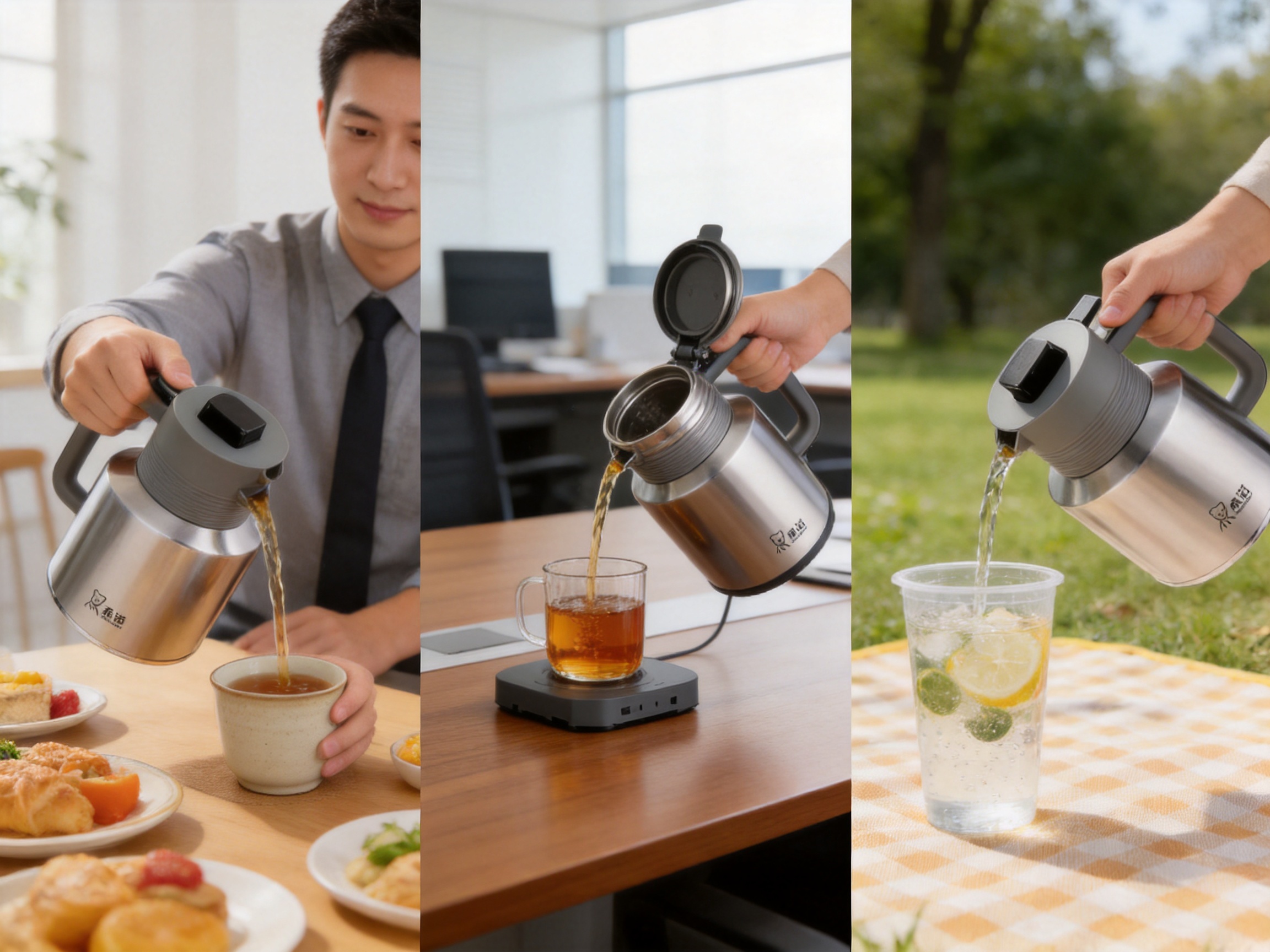
At home, the kettle can be used for breakfast tea, afternoon tea, hot water, coffee, or chilled drinks. A user can prepare a beverage once and serve several cups over time. This is convenient for families because not every person needs to prepare an individual drink separately.
The product can also support daily hydration. Plain water, warm water, and infused water can be stored in the kettle and placed in a central location. The large opening and dispensing mechanism reduce the need for repeated pouring from a saucepan or electric kettle, while the insulated body helps maintain a more consistent drinking temperature.
Office and Meeting Use
In an office, the kettle can be used in break rooms, conference spaces, reception areas, and shared kitchens. The one-touch button is helpful during meetings because users can serve tea without removing a lid or interrupting the discussion. The 1.6-liter model is particularly practical for group service, while the 1.1-liter version suits smaller teams or personal work areas.
Its stable base and covered spout also support organized workplace use. A clean, controlled pour reduces the risk of spills on documents, desks, and electronic equipment. Because the product is reusable, it can help reduce reliance on individually packaged beverages in routine service settings.
Outdoor Picnics and Social Gatherings
For outdoor use, vacuum insulation helps drinks remain hot or cool while users are away from a kitchen. The kettle can support picnics, family trips, recreational activities, and informal gatherings. Its storage capacity reduces the need to carry several smaller containers for the same group.
Outdoor use requires attention to handling and placement. The kettle should be transported upright, kept on a stable surface when possible, and protected from severe impact. The reinforced base improves everyday durability, but no stainless steel vacuum product should be treated as indestructible. Careful handling will support longer service life.
Manufacturing Capabilities and Industrial Process
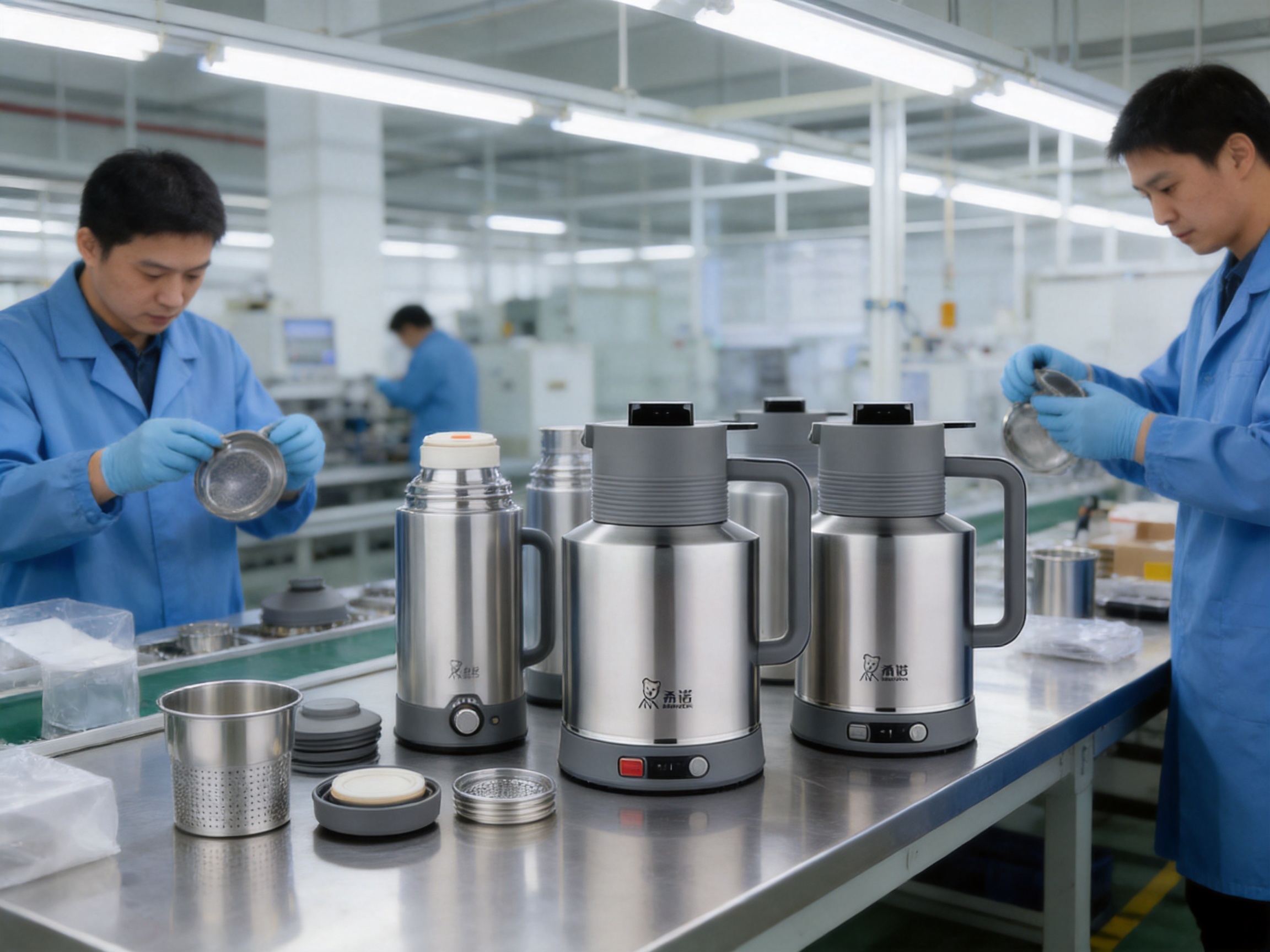
Heenoor Co., Ltd. was founded in 1999 and has developed into a drinkware manufacturer with capabilities covering product development and industrial manufacturing. Its manufacturing model integrates product design, engineering validation, tooling development, standardized production, and quality management. This integrated structure is important for products such as vacuum kettles because performance depends on coordination between design details, materials, tooling, assembly, and inspection.
Product development begins with understanding the intended use. For this kettle, the design requirements include temperature retention, tea and water separation, safe beverage contact, smooth dispensing, stable placement, practical capacity, and manageable weight. Translating these requirements into a manufacturable product involves selecting materials, defining component relationships, establishing dimensions, and evaluating potential failure points.
Engineering validation helps determine whether the design can perform consistently before it enters large-volume production. Validation may include assessments of lid operation, dispensing function, spout flow, base stability, filter fit, body alignment, and vacuum performance. The goal is not merely to produce a visually attractive sample but to confirm that the product can be manufactured repeatedly with dependable performance.
Tooling development is another essential capability. Stainless steel bodies, lids, bases, and filter components require suitable forming and processing tools. Tool accuracy affects the consistency of dimensions, surface quality, assembly fit, and production efficiency. Proper tooling can reduce variation between batches and support stable output for larger customer programs.
Standardized production connects validated product specifications with repeatable factory operations. Standard operating procedures can define material preparation, forming, welding, polishing, cleaning, vacuum processing, component assembly, testing, and packaging. A controlled production sequence helps ensure that each unit follows the same basic process rather than relying on individual operator judgment alone.
Quality management provides the framework for identifying, measuring, and controlling product risks. For a vacuum kettle, relevant checkpoints may include incoming material verification, liner inspection, weld and seal inspection, vacuum performance testing, leakage testing, component function checks, appearance inspection, and final packaging review. The exact inspection plan may vary according to customer requirements and production conditions.
From Material Preparation to Finished Kettle
The production process begins with material preparation. Stainless steel components must meet the specified grade and thickness requirements. Surface condition, flatness, cleanliness, and dimensional suitability can influence later forming and finishing steps. Using controlled materials helps establish a reliable foundation for the finished product.
Body forming creates the primary inner and outer structures. The process must maintain consistent geometry so that the components fit together correctly and provide an appropriate space for the vacuum layer. Excessive deformation, uneven walls, or dimensional instability may affect insulation performance and assembly quality.
Welding or joining operations connect the relevant stainless steel parts. These operations require control of heat, alignment, penetration, and surface finish. The sealed vacuum structure depends on reliable joints. A small defect in a critical area may allow air to enter the vacuum chamber and reduce thermal performance over time.
After joining, the body may undergo cleaning and surface treatment to remove residues and prepare it for subsequent assembly. Beverage products require careful attention to cleanliness because internal surfaces come into contact with consumable liquids. Cleaning standards should be defined and verified as part of the production control system.
Vacuum processing removes air from the insulating space before the structure is sealed. This step requires suitable equipment and controlled operating parameters. The effectiveness of the vacuum depends on the integrity of the sealed chamber and the stability of the process. Testing after vacuum formation helps identify units that do not meet the required performance level.
The lid assembly is produced and fitted separately. It combines stainless steel with PP and PC components, allowing the design to incorporate a metal structure with engineered polymer parts for operation, insulation, grip, and component integration. The dispensing button, valve, pull-to-open mechanism, and spout must be assembled with attention to fit and movement.
The filter screen is installed in the designated tea preparation area. Its position must be consistent so that it can support separation without obstructing normal flow. Assembly workers or automated equipment must ensure that the filter is secure, clean, and free from deformation before final inspection.
The reinforced base is then fitted to the lower section. It must be aligned with the body and provide stable contact with a flat surface. A base inspection can include visual checks, dimensional checks, and stability tests to verify that the kettle does not rock excessively when placed upright.
Final assembly brings together the body, lid, filter, dispensing system, spout, and base. Functional testing can confirm that the lid opens through the pull-to-open structure, the one-touch button operates correctly, the pouring path is unobstructed, and the assembly does not leak during normal use.
Quality Control Priorities
Quality control for a vacuum kettle should address both measurable technical performance and practical user experience. A product may meet a basic appearance standard while still failing to provide smooth operation or reliable insulation. Comprehensive inspection helps reduce this risk.
Material verification confirms that the inner liner and filter screen use the specified 304 stainless steel. This may involve supplier documentation, traceability records, or material testing according to the manufacturer’s quality procedures. Material control is particularly important when multiple grades of stainless steel are processed within the same manufacturing environment.
Dimensional inspection verifies that body parts, lid components, filter elements, and base pieces conform to approved drawings or production specifications. Consistent dimensions support interchangeability and help maintain stable assembly quality across batches.
Vacuum testing evaluates whether the insulating structure has been properly formed and sealed. Thermal performance checks can provide additional evidence that the vacuum layer is functioning as intended. The test method, duration, and acceptance criteria should be established according to the product specification and customer requirements.
Leakage testing is essential for the lid, dispensing button, filter area, and spout. A kettle intended for hot liquids must maintain a secure closure during ordinary handling. Testing should consider different positions and operating conditions where appropriate, while recognizing that the product should still be transported and used according to its instructions.
Functional testing evaluates the user interface. Inspectors can verify that the lid opens smoothly, the button can be pressed with reasonable force, the valve returns to its closed position, and liquid flows through the spout without unusual obstruction or uncontrolled splashing.
Appearance inspection reviews polishing, surface marks, dents, discoloration, sharp edges, assembly gaps, and printed or molded details. Appearance is not merely cosmetic in a drinkware product; surface defects may affect cleaning, safety, corrosion resistance, or brand presentation.
Packaging inspection protects the product after it leaves the production line. Appropriate internal protection can reduce damage during handling and transportation. Packaging should also preserve the cleanliness of the beverage-contact components until the product reaches the customer.
Why Integrated Manufacturing Benefits Buyers
Buyers benefit when product design, tooling, production, and quality management are coordinated within one manufacturing system. Integrated capabilities can shorten communication paths, reduce misunderstandings between engineering and production teams, and make it easier to address technical changes.
For customized or large-volume programs, this coordination is especially valuable. A buyer may require a different capacity, color, surface treatment, lid configuration, packaging format, or logo application. Each change can affect tooling, assembly, testing, and cost. A manufacturer with internal development and production coordination can evaluate these effects more systematically.
Engineering validation also reduces the risk of moving an unproven design directly into mass production. Early testing can reveal whether a button is difficult to operate, whether a spout drips, whether a filter is hard to clean, or whether a base lacks sufficient stability. Addressing these matters before large-scale production is generally more efficient than correcting them after shipment.
Standardized production supports supply stability. Buyers that serve retail, hospitality, or corporate customers need consistent quality across repeated orders. A structured manufacturing system can help maintain product specifications from one production run to the next, provided that materials, tooling, processes, and inspection standards remain controlled.
Heenoor’s experience across stainless steel, titanium, plastic, and glass drinkware also provides a broader technical background for evaluating material choices and product structures. Different materials offer different combinations of weight, durability, thermal behavior, appearance, and cost. This cross-material experience can support practical product development for everyday, professional, and premium markets.
Care, Cleaning, and Long-Term Performance
Regular care is important for maintaining the hygiene and function of the kettle. After use, the liner, lid, filter screen, and dispensing area should be cleaned according to the applicable care instructions. Tea residue and mineral deposits should not be allowed to accumulate because they may affect taste, appearance, flow, and button operation.
The filter screen deserves particular attention. Loose tea leaves and fine particles can remain around the mesh or openings. Rinsing soon after use can make cleaning easier. If deposits develop, a suitable cleaning method for stainless steel drinkware may be used, while abrasive tools that could damage the surface should be avoided.
The lid and dispensing mechanism should also be checked periodically. The button should move smoothly, and the spout should remain clear. If the product shows leakage, unusual resistance, or damage, it should be removed from service until the issue has been assessed.
Users should avoid overfilling the kettle. Sufficient space should remain for safe closure and normal liquid movement. The lid should be properly closed before the product is carried, and the kettle should be kept upright during transport whenever possible.
Because the product is intended for both hot and cold beverages, users should consider the temperature of the liquid and the condition of the external surfaces during handling. Hot beverages can cause burns if spilled, even when the container provides insulation. Safe placement and careful pouring remain important.
With suitable maintenance, the stainless steel body, filter, and reinforced base can support repeated daily use. Proper cleaning also helps preserve the neutral taste of beverages and the professional appearance expected in homes, offices, and hospitality environments.
Purchasing Considerations for Wholesale and Custom Programs
Wholesale buyers should first determine the expected application. A retailer may require a balanced assortment of both capacities, while an office supplier may prefer the 1.6-liter version for shared meeting spaces. Hospitality buyers may evaluate the product according to service volume, cleaning requirements, visual presentation, and replacement cycles.
Material requirements should be confirmed in the purchase specification. The listed configuration uses 304 stainless steel for the inner liner and filter screen, with a lid structure composed of 304 stainless steel, PP, and PC. Buyers should also confirm whether any additional surface treatments, colors, packaging formats, or accessory requirements apply to a specific program.
Testing expectations should be discussed before production. Depending on the market and application, a buyer may request documentation relating to material composition, leakage, vacuum performance, functional operation, packaging, or food-contact suitability. Clear requirements at the beginning of a project help align engineering, quality, and procurement teams.
Capacity and weight should be considered together. A larger unit provides more servings but may be heavier when filled. The smaller model may be more practical for individual use or frequent repositioning. Product descriptions, cartons, and sales materials should communicate these differences clearly so that end users can make an informed choice.
For custom programs, buyers may also evaluate minimum order quantities, development timelines, tooling requirements, color matching, logo application, packaging design, and inspection procedures. A manufacturer with design, engineering, tooling, standardized production, and quality management capabilities can support these discussions from a more complete technical perspective.
Frequently Asked Questions
What type of product is this?
It is a stainless steel vacuum kettle designed for tea preparation, beverage storage, and controlled serving. It includes a tea filter screen, a one-touch dispensing button, a pull-to-open lid, and a reinforced base.
What materials are used for the inner liner and filter?
Both the inner liner and filter screen are made from 304 stainless steel. The lid uses a combination of 304 stainless steel, PP, and PC.
What capacities are available?
Two configurations are available: a 1.6-liter model weighing approximately 1.1 kilograms and a 1.1-liter model weighing approximately 0.88 kilograms.
Can the kettle be used for cold beverages?
Yes. The vacuum insulation is intended to support both hot and cold beverage storage. It can help slow warming of chilled drinks as well as heat loss from hot beverages.
What is the purpose of the filter screen?
The 304 stainless steel filter screen supports tea and water separation. It can help retain larger tea leaves or infusion ingredients while allowing liquid to pass through during serving.
How does the one-touch dispensing system work?
The user presses the dispensing button integrated into the lid to release liquid through the spout. This allows convenient one-handed operation without removing the entire lid during normal serving.
What is the function of the pull-to-open lid?
The pull-to-open structure provides a straightforward way to access the lid when filling, cleaning, or preparing the kettle. The dispensing button can then be used for routine pouring.
Where can the kettle be used?
It is suitable for homes, offices, meetings, family gatherings, outdoor picnics, and other settings where beverages need to be prepared, stored, and served over time.
Why is 304 stainless steel suitable for this product?
304 stainless steel offers corrosion resistance, durability, and a stable beverage-contact surface. It is widely used in drinkware and food-related applications when produced and maintained according to appropriate standards.
Does vacuum insulation mean the beverage will remain at exactly the same temperature?
No. Vacuum insulation slows heat transfer but does not stop it completely. Actual temperature retention depends on the starting temperature, fill level, ambient conditions, lid condition, frequency of opening, and other factors.
How should the filter and lid be cleaned?
The filter and lid should be rinsed and cleaned after use, with special attention to tea residue around the mesh, valve, and spout. Users should follow the applicable care instructions and avoid cleaning methods that may damage the surfaces or components.
What manufacturing capabilities support this product?
The manufacturer integrates product design, engineering validation, tooling development, standardized production, and quality management. These capabilities support development from initial concept through large-volume manufacturing and inspection.
Can the product be considered for a custom drinkware program?
It may be evaluated for custom programs involving product development, tooling, packaging, surface treatment, branding, or other project requirements. Final feasibility depends on the requested specifications, order volume, testing requirements, and production conditions.
Conclusion
The Stainless Steel Tea Water Separation Stewing Teakettle is designed as a complete beverage service solution rather than a simple storage vessel. Its 304 stainless steel liner provides a durable and corrosion-resistant beverage-contact surface, while the 304 stainless steel filter screen supports controlled tea preparation. Vacuum insulation helps slow heat transfer for hot and cold applications, and the sealed lid structure contributes to practical temperature retention.
The one-touch dispensing button, pull-to-open lid, covered spout, and reinforced base address the details that influence everyday satisfaction. Together, these features support convenient one-handed operation, cleaner pouring, stable placement, and reliable repeated use. The 1.6-liter and 1.1-liter options allow buyers to match capacity and handling requirements to different environments.
Compared with basic pitchers, conventional teapots, and single-purpose beverage containers, the product offers a broader combination of insulation, tea separation, capacity, and controlled dispensing. Its competitive value is supported by practical engineering rather than appearance alone.
The manufacturer’s integrated capabilities in product design, engineering validation, tooling development, standardized production, and quality management further strengthen the product proposition. Experience across stainless steel, titanium, plastic, and glass drinkware supports a manufacturing approach focused on durable, scalable, and technically clear solutions.
For households, offices, hospitality settings, outdoor gatherings, and wholesale drinkware programs, this kettle provides a versatile platform for modern beverage preparation and service. With appropriate care and controlled manufacturing, it can deliver dependable functionality throughout its intended service life.
References
1. Product specification for Stainless Steel Tea Water Separation Stewing Teakettle, models XN-8851 and XN-8852.
2. Technical product information on 304 stainless steel inner liner and filter screen construction.
3. General engineering principles of vacuum insulation and reduced heat transfer in double-wall beverage containers.
4. General manufacturing practices for stainless steel drinkware, including forming, welding, vacuum processing, assembly, and inspection.
5. General food-contact equipment considerations for stainless steel, PP, and PC components.
6. Company manufacturing information describing product design, engineering validation, tooling development, standardized production, and quality management capabilities.
Product: Stainless Steel Tea Water Separation Stewing Teakettle

You may also like…

Copyright © 2025 Heenoor Co., Ltd. All Rights Reserved.
 Custom Stainless Steel Drinkware Manufacturers
BACK TOP