 English
 中文简体
中文简体 日本語
日本語 Español
 عربى
عربى
Search
Categories
Recommend
Categories
 Lin Yuxi — International Product Sales Manager
Recommend
-
 Industry news
 -
 Industry news
 -
 Industry news
 -
 Industry news
Sep 24, 2026 - By admin
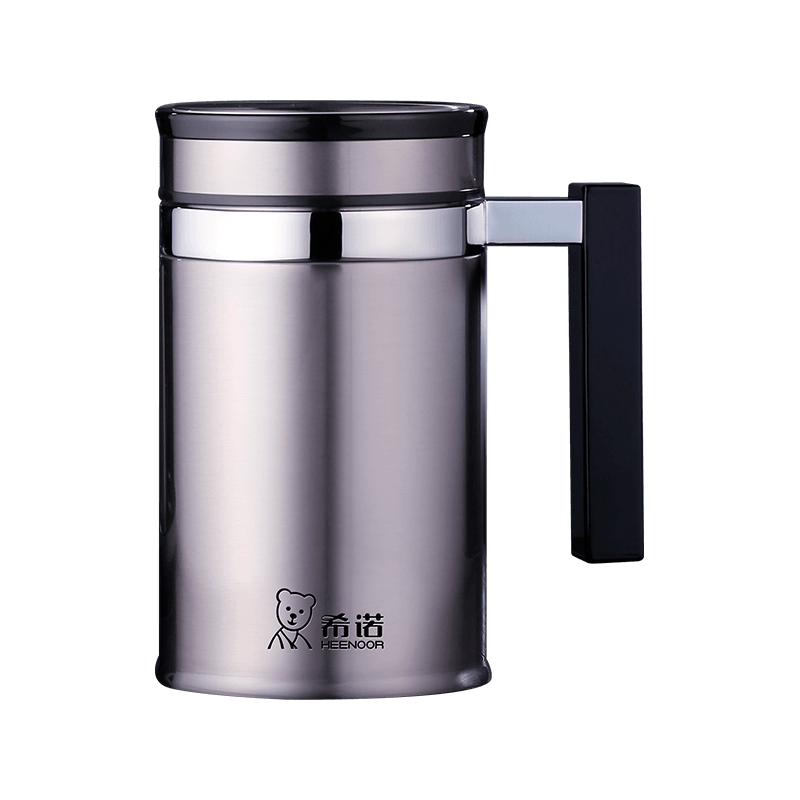
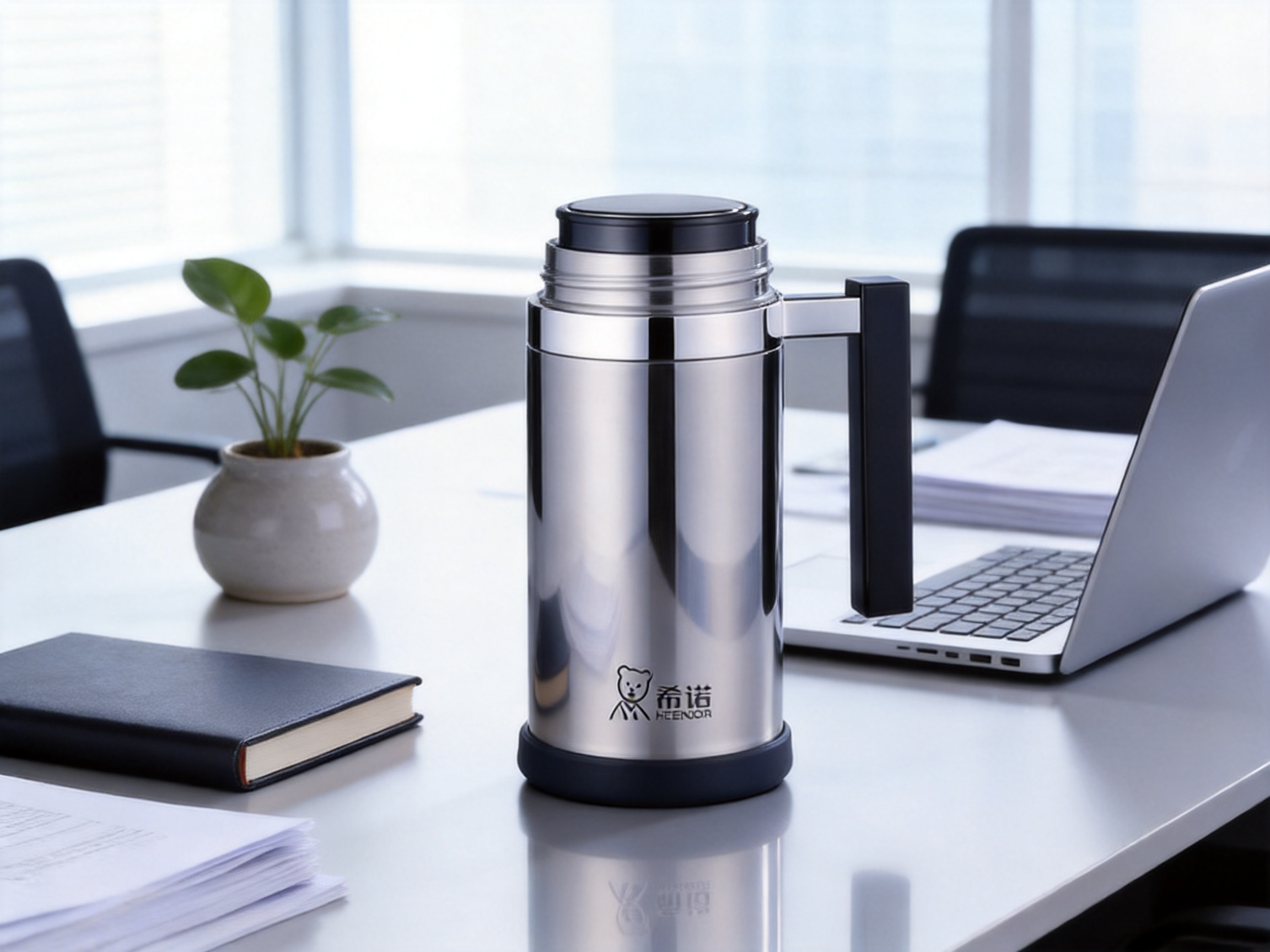
Business Office Handle Stainless Steel Vacuum Flask: A Practical Standard for Modern Tea and Beverage Service
Content
- 1 Designed for Professional Daily Use
- 2 304 Stainless Steel Interior for Reliable Beverage Contact
- 3 Vacuum Flask Construction for Everyday Temperature Management
- 4 Leak-Resistant Lid Structure
- 5 Lotus-Shaped Filter for Tea Preparation
- 6 Rounded Wide Mouth for Comfort and Maintenance
- 7 Reinforced Handle for Stable Carrying
- 8 Silicone Non-Slip Base for Desk Stability
- 9 Protective Silicone Ring for Surface Protection
- 10 Advantages Compared with Common Competitor Designs
- 11 Manufacturing Strengths and Product Development Capability
- 12 Materials and Process Coordination
- 13 Scalability for Commercial and Procurement Programs
- 14 Quality Considerations for Buyers
- 15 Maintenance and Daily Use Guidance
- 16 Suitability for Different Applications
- 17 Why Integrated Functionality Matters
- 18 Manufacturing Partner for Long-Term Programs
- 19 Q&A
- 19.1 What is the capacity of the Business Office Handle Stainless Steel Vacuum Flask?
- 19.2 What material is used inside the flask?
- 19.3 Does the flask include a tea filter?
- 19.4 Is the lid designed to resist leakage?
- 19.5 What materials are used in the lid?
- 19.6 Why does the flask have a handle?
- 19.7 Does the flask have protection against sliding on a desk?
- 19.8 What is the purpose of the silicone protective ring near the lid?
- 19.9 Is the wide mouth useful for cleaning?
- 19.10 What is the model number?
- 19.11 How much does the flask weigh?
- 19.12 Where can the flask be used?
- 19.13 How does this product compare with a standard plastic bottle?
- 19.14 How does it compare with a handle-free insulated bottle?
- 19.15 What manufacturing capabilities support this product?
- 19.16 Can the manufacturer support large-volume programs?
- 19.17 What should users do to maintain the flask?
- 20 Conclusion
- 21 References
- 22 Product: Business Office Handle Stainless Steel Vacuum Flask
In offices, meeting rooms, reception areas, and homes, drinkware must do more than hold a beverage. A dependable flask should preserve temperature, prevent leakage, withstand frequent handling, remain comfortable to use, and look appropriate in professional surroundings. The Business Office Handle Stainless Steel Vacuum Flask is designed around these practical requirements. It combines a 304 stainless steel interior, a carefully fitted lid, a lotus-shaped tea filter, a reinforced handle, a rounded drinking opening, and protective silicone components into one office-oriented beverage solution.
With a capacity of 480 milliliters and a weight of 0.48 kilograms, this flask occupies a useful middle position between a small personal cup and a large travel bottle. It provides enough capacity for tea, coffee, or other daily beverages without becoming unnecessarily bulky on a desk. Its handle gives users a secure grip, while the non-slip base helps maintain stability on smooth office surfaces. These features make the product especially suitable for users who want the convenience of a handled cup with the insulation and durability associated with stainless steel vacuum drinkware.
The product is identified by model XN-7621 and belongs to the stainless steel vacuum flask category. It is suitable for business offices, meeting spaces, homes, hotel rooms, study areas, and other environments where a refined and reusable drinking vessel is preferred. Its design also supports procurement projects that require practical specifications, consistent manufacturing, and a product that can serve a broad range of users.
Designed for Professional Daily Use
Office drinkware is used repeatedly throughout the day. It may be filled in the morning, carried between workstations, placed beside documents, taken into a conference room, and cleaned before the next use. This routine creates requirements that are different from those of occasional-use outdoor bottles. A business flask should be visually appropriate, easy to handle, resistant to ordinary wear, and simple to maintain.
The XN-7621 addresses these expectations through a balanced design. Its stainless steel body supports durability and repeated use, while the handle makes the flask easier to lift and carry than a handle-free cylindrical bottle. The rounded and wide mouth improves contact comfort and provides more space for cleaning. The lotus-shaped filter is particularly useful for tea drinkers because it helps separate leaves from the liquid while the beverage is being poured or consumed.
Many office users drink loose-leaf tea, herbal infusions, or fruit-infused water. A conventional bottle may allow leaves or ingredients to move freely through the opening, creating an inconvenient drinking experience. The built-in filter provides a more controlled solution without requiring a separate tea strainer. This makes the flask more suitable for business environments, where users may want freshly prepared tea without bringing additional accessories.
The product’s design is also intentionally moderate. It does not depend on excessive decorative components or complicated mechanisms. Instead, it focuses on the parts that influence everyday performance: the inner material, sealing structure, filter, handle, base, and contact protection. This functional approach can be advantageous compared with products that add unnecessary features while making cleaning, repair, or use more complicated.
304 Stainless Steel Interior for Reliable Beverage Contact
The interior of the flask is made from 304 stainless steel. This material is widely used in food-contact and drinkware applications because it offers a practical combination of corrosion resistance, strength, cleanability, and long-term durability. For users who regularly prepare tea or other beverages, the interior material is especially important because it comes into frequent contact with heat, moisture, and naturally occurring acids in drinks.
A 304 stainless steel interior is also less likely to retain the odors commonly associated with some porous or lower-quality materials. This is valuable for offices where the same flask may be used for tea one day and water or coffee the next. When properly cleaned, the stainless steel surface can support a fresher drinking experience and reduce the likelihood that previous beverages will dominate the flavor or aroma of later drinks.
Compared with many disposable or thin plastic alternatives, stainless steel offers a more durable solution for repeated use. It is less vulnerable to cracking from ordinary handling and does not depend on a fragile exterior coating for basic structural integrity. Compared with ordinary glass cups, stainless steel is better suited to environments where accidental impact, desk movement, or frequent transportation may occur.
The stainless steel body also supports a professional appearance. Its material quality aligns with the expectations of offices, conference rooms, hospitality spaces, and corporate gifting programs. While appearance is not a substitute for performance, a clean metal finish and structured form can help the product fit naturally into professional surroundings.
Vacuum Flask Construction for Everyday Temperature Management
The product is classified as a vacuum flask, meaning its construction is intended to reduce the speed at which heat moves between the beverage and the surrounding environment. This is useful for hot tea, warm water, coffee, and chilled beverages. A vacuum-insulated format can help beverages remain closer to their starting temperature for longer than a conventional single-wall cup, although actual performance depends on beverage temperature, filling level, ambient conditions, lid position, and usage habits.
For office users, temperature management is not merely a matter of comfort. A beverage may be prepared at the beginning of a meeting and consumed gradually over an extended period. A suitable insulated flask can reduce the need to repeatedly reheat tea or refill a cup. This can make the workday more convenient while encouraging the use of a reusable product rather than disposable takeaway containers.
The 480ML capacity is well suited to individual consumption. It is large enough for a substantial serving of tea or water, yet compact enough to fit naturally on a desk or meeting table. A very large bottle can be inconvenient in a crowded office, while a small cup may require frequent refilling. The selected capacity creates a practical compromise between portability and beverage volume.
Users should follow normal safe-drinking practices when filling the flask with hot beverages. The lid should be closed securely, the flask should be kept upright during transport, and sufficient space should be left when required for the beverage and lid assembly. The product is designed for ordinary beverage use, and careful handling contributes to its long-term performance.
Business Office Handle Stainless Steel Vacuum Flask
Leak-Resistant Lid Structure
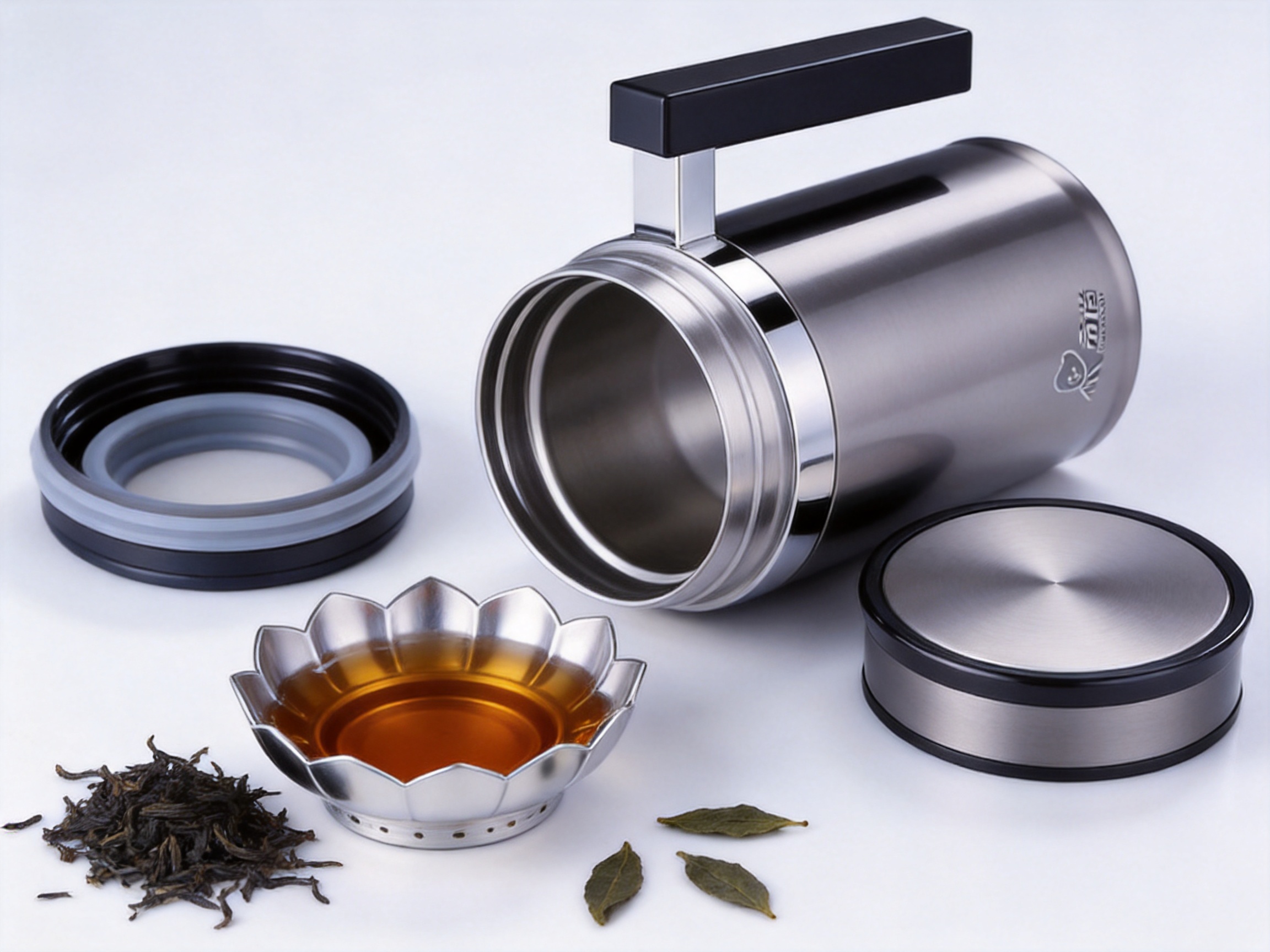
A dependable lid is one of the most important components of any reusable flask. Even a strong stainless steel body cannot compensate for a poorly fitted closure. The Business Office Handle Stainless Steel Vacuum Flask uses a lid constructed from 304 stainless steel and PP, together with a heat-resistant silicone rubber sealing ring. This combination is intended to provide a secure closure while supporting repeated contact with hot beverages.
The silicone sealing ring sits inside the lid and helps create a close connection between the lid and the flask body. This design reduces the possibility of liquid escaping when the flask is tilted or turned upside down. It is particularly useful in office situations, where a leak could damage papers, electronic devices, desks, or personal belongings.
The sealing system also contributes to a cleaner user experience. A well-fitted lid helps contain beverage aroma and reduces splashing during routine movement. When the flask is carried from a workstation to a meeting room, users can handle it with greater confidence. The lid should still be fully closed before transportation, and users should inspect the sealing ring periodically to ensure that it remains correctly positioned and free from accumulated residue.
The use of heat-resistant silicone rubber is another practical advantage. Silicone can maintain flexibility across the temperature range normally associated with hot and cold beverages. Its elasticity allows it to conform to the mating surfaces of the lid and body, supporting repeated opening and closing. Compared with rigid sealing materials, flexible silicone is better able to accommodate small contact variations while maintaining a dependable seal.
The lid’s 304 stainless steel component gives the closure a more substantial and durable character than a lid made entirely from thin plastic. PP contributes to structural support and helps the manufacturer create a precise, functional lid assembly. Together, these materials support the product’s intended combination of professional appearance, practical sealing, and repeated daily use.
Lotus-Shaped Filter for Tea Preparation
One of the product’s distinguishing features is its lotus-shaped filter. The filter is designed to separate tea leaves from the liquid, helping keep loose particles out of the drink. This is especially helpful for green tea, black tea, oolong tea, flower tea, and other beverages prepared with loose ingredients.
The filter improves convenience without requiring a separate infuser basket or external strainer. Users can add tea leaves to the flask, close the lid, and pour or drink through the filtered area. The filter helps retain larger tea particles while allowing the beverage to flow through. This creates a more refined experience than using an ordinary bottle with an unrestricted opening.
The lotus-inspired form also adds visual distinction while serving a functional purpose. Unlike decorative elements that do not contribute to performance, the filter is directly connected to how the beverage is prepared and consumed. Its presence positions the flask as a tea-oriented office product rather than merely a general-purpose insulated container.
Tea drinkers should clean the filter after each use, especially when fine leaves or herbal ingredients are used. Residue can affect flow and may create unwanted odors if it remains in place for extended periods. The wide mouth of the flask makes this cleaning process easier because users can access the interior more directly.
Compared with competitors that offer insulation but no integrated tea separation, this flask can provide a more complete daily tea solution. It combines storage, insulation, filtering, and carrying functions in one product. That integrated approach may reduce the need for accessory purchases and simplify the user’s routine.
Rounded Wide Mouth for Comfort and Maintenance
The mouth of the flask is rounded and wide. This detail influences both drinking comfort and product maintenance. A rounded edge provides a smoother contact point for the lips, while the broader opening allows beverages to be poured more naturally. It also makes it easier to add tea leaves, ice, or other suitable ingredients when preparing a drink.
A wide mouth is especially valuable during cleaning. Narrow openings can make it difficult to reach the bottom of a container or inspect internal surfaces. With a broader opening, users can more easily rinse the interior, remove tea residue, and check whether the sealing components or filter require attention. Better access supports more consistent hygiene and helps preserve the appearance and odor neutrality of the stainless steel interior.
The rounded design also reflects attention to user comfort. In an office environment, a flask may be used many times throughout the day. Small contact details become noticeable over repeated use, and a smooth mouth can make the product feel more refined than a container with a sharp or unfinished edge.
This combination of wide access and rounded contact is a competitive advantage over some narrow-neck insulated bottles. Narrow-neck designs may offer spill resistance, but they can be more difficult to clean and less convenient for tea preparation. The XN-7621 balances controlled pouring with easier access, making it suitable for users who place a high value on maintenance and comfort.
Reinforced Handle for Stable Carrying
The reinforced handle is central to the product’s office-oriented design. A handle provides a natural lifting point and reduces the need to grip the smooth cylindrical body tightly. This is useful when the flask contains a hot beverage or when the user is carrying documents, a laptop, or other items at the same time.
Handle-free bottles often require users to wrap their entire hand around the body. While this may be acceptable for some travel bottles, it is not always ideal for a structured office setting. A dedicated handle can improve stability and make the product easier to pass across a meeting table. It may also reduce the chance of accidental drops caused by a slippery or wet exterior.
The handle is described as reinforced, indicating that it is designed to provide a stable grip rather than serve only as a decorative attachment. Its value is particularly clear for repeated daily use. A fragile handle could become a weak point, while a reinforced structure supports greater confidence during normal carrying and placement.
For procurement managers, the handle can also make the product more accessible to a wider range of users. People with smaller hands, reduced grip strength, or a preference for handled drinkware may find this design easier to use than a smooth bottle without a grip point.
Silicone Non-Slip Base for Desk Stability
The bottom of the flask is equipped with a silicone non-slip pad. This component helps the product remain stable when placed on a desk, conference table, reception counter, or other smooth surface. It can also reduce direct contact between the stainless steel body and the tabletop, helping minimize movement and surface noise.
Office environments often contain polished desks, glass tables, and other surfaces where a metal-bottomed container may slide more easily. A silicone base helps address this issue. It provides friction between the flask and the surface, reducing the possibility of unintended movement when the table is bumped or when users place the flask down after drinking.
The base can also help protect furniture from direct metal contact. Although users should still avoid dragging any drinkware across delicate surfaces, the silicone pad adds a layer of separation and contributes to a more considerate product design.
In comparison with insulated bottles that use only a rigid metal bottom, the non-slip pad offers a practical advantage for desk-based use. It supports the product’s intended environment and complements the reinforced handle by improving stability during both carrying and placement.
Protective Silicone Ring for Surface Protection
A silicone protective ring is positioned where the lid contacts the flask body. This ring helps prevent scratches and reduces direct contact between harder surfaces during opening, closing, and regular use. It is a small component, but it demonstrates attention to product longevity and appearance.
Repeated contact between metal parts can create visible marks over time, particularly when a lid is rotated or pressed into position. A silicone ring helps cushion this contact. By limiting friction and impact at the connection point, it can support a cleaner appearance and reduce unnecessary wear.
The protective ring also complements the sealing system. Although it is not the same as the internal heat-resistant silicone sealing ring, both components contribute to the overall performance of the closure area. One primarily supports sealing, while the other helps protect the external contact surfaces.
This layered use of silicone reflects a thoughtful approach to product design. Instead of treating the flask body, lid, and base as isolated parts, the design considers how each component interacts during daily use. Such details can distinguish a well-developed product from a basic container that provides only a metal body and a simple cap.
Advantages Compared with Common Competitor Designs
The product competes in a broad drinkware market that includes ordinary water bottles, plastic tumblers, glass tea cups, travel mugs, and insulated flasks. Its advantage is not based on one feature alone. Rather, it is based on how several practical functions are integrated into a compact office-oriented form.
Compared with a standard plastic bottle, the stainless steel vacuum flask offers a more durable and professional construction. It is better suited to repeated use in formal environments and can provide improved temperature management. The stainless steel interior also offers a clean, odor-resistant beverage-contact surface when properly maintained.
Compared with a conventional glass tea cup, the flask is more resistant to the everyday impact risks associated with carrying and desk use. It also offers a secure lid, a handle, and a tea filter, making it more practical for movement between rooms or workstations.
Compared with a handle-free travel bottle, the reinforced handle improves carrying comfort and offers a more natural grip. The wide mouth and integrated filter also make the product more suitable for tea preparation and cleaning.
Compared with a simple insulated tumbler, the lotus-shaped filter adds functionality for loose-leaf tea, while the silicone non-slip base and protective ring address stability and long-term surface protection. The combination creates a product that is more specialized for users who want both insulation and tea-serving convenience.
Compared with products that use generic or unspecified interior materials, the stated 304 stainless steel interior provides clearer material information for buyers and procurement teams. Specification transparency supports more informed purchasing decisions and helps organizations compare products on meaningful technical characteristics rather than appearance alone.
Another advantage is the balance between capacity and portability. At 480ML, the flask is neither an oversized hydration container nor a very small teacup. It is suitable for a personal serving and can fit naturally into office routines. This moderate size may be preferable for businesses purchasing drinkware for employees, meeting rooms, hospitality settings, or promotional programs.
Manufacturing Strengths and Product Development Capability
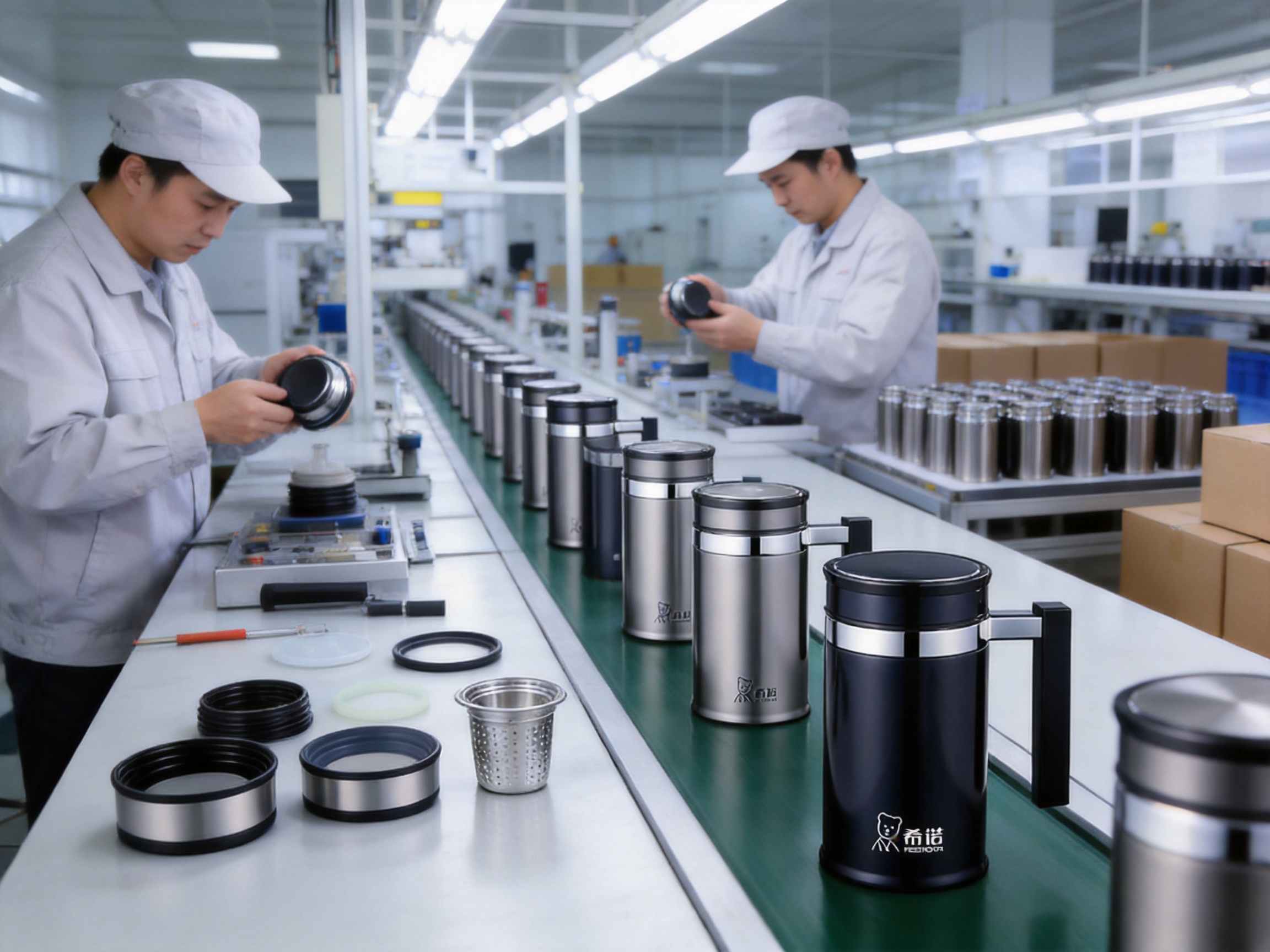
The product is supported by a manufacturing organization founded in 1999 and focused on drinkware development and industrial production. The company’s stated capabilities include product design, engineering validation, tooling development, standardized production, and quality management. These capabilities are important because dependable drinkware is the result of coordinated work across multiple stages rather than a single assembly operation.
Product design establishes the intended user experience and determines how the body, lid, filter, handle, sealing ring, protective ring, and base work together. Engineering validation then helps assess whether the design is suitable for manufacturing and repeated use. This stage is essential for identifying potential issues such as poor fit, unstable components, difficult cleaning access, or excessive stress around the handle and lid.
Tooling development supports dimensional consistency. Drinkware components often depend on accurate forming, molding, shaping, and assembly. The lid must align with the body, the sealing ring must sit correctly, the filter must remain functional, and the silicone components must be produced to suitable dimensions. Well-developed tooling can help reduce variation between production units.
Standardized production provides a framework for repeating approved processes across larger orders. For brands, organizations, and procurement teams, consistent production is as important as initial product quality. A flask that performs well as a sample but varies significantly during mass production creates unnecessary supply and service risks. A standardized manufacturing approach is intended to support more predictable results.
Quality management connects these activities by establishing procedures for inspection, process control, and continual improvement. While specific inspection results are not provided in the product information, the company’s emphasis on quality management indicates a structured approach to manufacturing rather than purely opportunistic production.
Materials and Process Coordination
The XN-7621 uses several material types, including stainless steel, PP, heat-resistant silicone rubber, and silicone for protective and non-slip functions. Each material has a different role, and the performance of the finished flask depends on how these parts are coordinated.
The stainless steel body must be formed and finished to support a smooth interior and a suitable exterior appearance. The lid components must be produced with dimensional accuracy so that they fit the body and accommodate the sealing ring. The filter must be positioned so that it separates tea leaves without unnecessarily restricting beverage flow. The handle must connect securely to the body, and the silicone base must remain attached during normal handling.
This type of multi-material product benefits from engineering review before mass production. Different materials expand, flex, and respond to temperature differently. A successful design must consider these interactions, particularly around the lid, seal, filter, and body connection. Manufacturing experience across stainless steel, plastic, silicone, glass, and titanium drinkware can support a broader understanding of material behavior and product requirements.
The company’s experience with stainless steel, titanium, plastic, and glass drinkware also indicates the ability to serve diverse product categories. This range can be valuable for buyers seeking a supplier capable of supporting multiple drinkware programs rather than a factory limited to one material or one production method.
Scalability for Commercial and Procurement Programs
The product is suitable not only for individual consumers but also for organizations purchasing in volume. Offices may require drinkware for employees, guests, meeting rooms, corporate events, or hospitality applications. In these situations, buyers need more than an attractive sample. They need stable specifications, repeatable production, clear communication, and reliable order support.
A manufacturer that integrates design, tooling, production, and quality management can provide a more coordinated supply process. This can simplify communication when modifications are required or when a buyer is developing a related product family. It may also reduce the need to manage separate suppliers for design, tooling, and manufacturing.
Large-volume procurement places particular importance on consistency. The capacity should remain within the specified range, lids should fit properly, filters should perform consistently, and silicone components should be installed correctly. Standardized processes and quality checkpoints help support these objectives.
Heenoor’s stated focus on reliable, large-volume drinkware programs aligns with the needs of brands, organizations, and procurement teams. Its manufacturing positioning emphasizes technical clarity, responsible execution, continuous improvement, and long-term supply stability. These strengths are relevant for buyers who view drinkware as part of a broader product or service program rather than as a one-time purchase.
Quality Considerations for Buyers
When evaluating a stainless steel vacuum flask, buyers should review more than the outer appearance. Important considerations include interior material, lid composition, sealing-ring material, filter function, handle stability, base adhesion, surface finishing, cleaning access, and consistency across production batches.
The available specifications provide a clear starting point. The model is XN-7621, the capacity is 480ML, and the weight is 0.48 kilograms. The lid uses 304 stainless steel and PP, the body is stainless steel, and the sealing ring uses heat-resistant silicone rubber. These details help procurement teams compare the product with alternatives using objective information.
Buyers may also wish to confirm packaging requirements, carton dimensions, sample procedures, testing arrangements, color options, branding possibilities, and order quantities directly with the manufacturer. These items are project-specific and should be agreed upon before production.
For organizations concerned with long-term use, maintenance instructions should be communicated clearly to end users. Users should clean the flask regularly, avoid leaving beverages inside for extended periods, inspect the sealing ring and filter, and ensure that all components are dry before storage. Proper care helps preserve both hygiene and performance.
Maintenance and Daily Use Guidance
Although the flask is built for repeated use, maintenance remains important. After drinking tea or another beverage, the body, lid, and filter should be rinsed promptly. Tea leaves should not be allowed to dry onto the filter because dried residue can be more difficult to remove and may restrict flow.
The wide mouth makes it easier to clean the interior with a suitable brush or soft cleaning tool. Abrasive materials should be avoided if they could scratch the surface. The silicone sealing ring should be removed only according to appropriate care instructions and should be checked for residue, deformation, or incorrect placement.
The flask should not be overfilled. Users should close the lid securely but avoid forcing components beyond their intended range. When carrying hot beverages, the exterior and lid should be handled carefully, and the flask should remain upright whenever possible.
The non-slip silicone base should be kept free from dust and oily residue so that it can continue to provide effective friction. The protective silicone ring around the lid contact area should also be kept clean. Regular attention to these small components can help extend the product’s useful life.
For shared office use, organizations may wish to provide simple cleaning guidance. Clear instructions can reduce misuse, improve hygiene, and help employees understand the product’s features. For individual users, consistent cleaning supports the odor-free character expected from a stainless steel beverage container.
Suitability for Different Applications
The flask is naturally suited to office desks and meeting rooms, but its applications extend beyond those environments. At home, it can serve tea during reading, study, breakfast, or relaxed work. In hospitality settings, it can provide a practical personal beverage vessel for guests or staff. In corporate gifting, its professional appearance and useful features can make it more meaningful than a disposable promotional item.
The product can also support workplace wellness programs that encourage regular water or tea consumption. A reusable 480ML flask gives employees a convenient way to keep a beverage nearby while reducing dependence on disposable cups. Its durable materials and integrated filter may encourage more consistent use than a basic cup with no lid.
For meeting rooms, the handle and secure lid help users move the flask without excessive spillage risk. The non-slip base supports placement on shared tables, while the professional design fits formal interiors. For home offices, the flask can reduce interruptions caused by repeated trips to refill or reheat a drink.
These applications demonstrate the product’s versatility. It is specialized enough to support loose-leaf tea but general enough for water and other ordinary beverages. This balance can make it suitable for mixed-user environments where preferences differ.
Why Integrated Functionality Matters
A common weakness in drinkware is that individual features are offered separately. One product may have excellent insulation but no filter. Another may include a tea infuser but lack a stable base. A third may have a comfortable handle but a narrow opening that is difficult to clean. The Business Office Handle Stainless Steel Vacuum Flask brings these requirements together in a coordinated design.
Integrated functionality can improve convenience and reduce accessory dependence. Users do not need to carry a separate strainer for loose-leaf tea, find a separate coaster for stability, or add an external grip for carrying comfort. The lid, filter, handle, base, and protective ring are part of the original product design.
This approach can also simplify purchasing for organizations. Instead of combining several components from different sources, a procurement team can select one product that already addresses multiple daily-use needs. Fewer separate items can mean simpler distribution, easier user training, and a more consistent appearance across an office or event.
The product’s integrated construction also reflects a more mature development process. Features must be considered together so that they do not interfere with one another. The filter must work with the lid, the lid must seal against the body, the handle must support carrying, and the base must maintain stability without making the flask difficult to clean or place.
Manufacturing Partner for Long-Term Programs
For many buyers, the supplier relationship is as important as the product itself. A long-term drinkware program may involve sampling, design review, tooling, production scheduling, quality coordination, packaging, and repeat orders. A supplier with experience across these stages can help reduce communication gaps and improve project continuity.
Heenoor Co., Ltd. presents itself as a manufacturer with integrated product development and industrial manufacturing capabilities. Its stated approach combines design, engineering validation, tooling development, standardized production, and quality management. This structure is relevant to buyers seeking a manufacturing partner rather than a simple trading intermediary.
The company’s experience since 1999 provides a long operating history in the drinkware field. Its product-material experience includes stainless steel, titanium, plastic, and glass. This breadth may support custom development projects in which buyers need to compare materials, adapt an existing design, or create a product series for different market segments.
The company also emphasizes scalable manufacturing and international project support. These strengths are valuable when buyers need dependable communication, repeatable specifications, and a supplier prepared to manage larger or continuing programs. Product performance remains important, but project execution determines whether that performance can be delivered consistently at commercial scale.
Q&A
What is the capacity of the Business Office Handle Stainless Steel Vacuum Flask?
The capacity is 480ML. This size is intended for an individual serving of tea, water, coffee, or another suitable beverage. It provides more volume than a small teacup while remaining practical for office desks and meeting rooms.
What material is used inside the flask?
The interior is made from 304 stainless steel. This material is known for practical corrosion resistance, durability, cleanability, and suitability for repeated beverage contact when the product is properly maintained.
Does the flask include a tea filter?
Yes. The flask includes a lotus-shaped filter designed to separate tea leaves from the liquid. This feature supports loose-leaf tea preparation and helps prevent larger tea particles from entering the drink.
Is the lid designed to resist leakage?
The lid includes a heat-resistant silicone rubber sealing ring that helps create a secure seal between the lid and the flask body. The lid should be closed correctly and the sealing ring should be kept clean and properly positioned for best performance.
What materials are used in the lid?
The lid is made from 304 stainless steel and PP. It also includes the heat-resistant silicone sealing ring used for sealing performance.
Why does the flask have a handle?
The reinforced handle provides a stable and comfortable grip. It makes the flask easier to lift, carry, and pass across a meeting table than a smooth bottle without a dedicated handle.
Does the flask have protection against sliding on a desk?
Yes. The bottom includes a silicone non-slip pad designed to help keep the flask steady on smooth surfaces such as desks, counters, and conference tables.
What is the purpose of the silicone protective ring near the lid?
The protective ring is positioned where the lid contacts the body. It helps reduce scratches and direct surface contact, supporting the appearance and service life of the flask.
Is the wide mouth useful for cleaning?
Yes. The rounded wide mouth improves drinking comfort and provides easier access for rinsing, cleaning the interior, and removing tea residue from the filter or body.
What is the model number?
The model number is XN-7621.
How much does the flask weigh?
The listed weight is 0.48 kilograms. Actual packaged shipping weight may differ because packaging materials are not included in the product weight specification.
Where can the flask be used?
It is suitable for offices, homes, meeting rooms, reception areas, study spaces, hospitality environments, and other locations where a reusable insulated beverage container is appropriate.
How does this product compare with a standard plastic bottle?
It offers a stainless steel interior, vacuum-flask construction, a more professional design, an integrated tea filter, a reinforced handle, and a non-slip base. These features make it more suitable for repeated office use than many basic plastic bottles.
How does it compare with a handle-free insulated bottle?
The reinforced handle provides an easier grip, while the wide mouth and tea filter support preparation and cleaning. These features make it more oriented toward office tea drinking and comfortable daily handling.
What manufacturing capabilities support this product?
The manufacturer states that it integrates product design, engineering validation, tooling development, standardized production, and quality management. It also has experience with stainless steel, titanium, plastic, and glass drinkware.
Can the manufacturer support large-volume programs?
The company positions its manufacturing operations to support reliable, large-volume drinkware programs. Buyers should discuss order quantities, sampling, packaging, quality requirements, and delivery schedules directly with the manufacturer.
What should users do to maintain the flask?
Users should rinse the flask and filter after use, clean the sealing components, remove tea residue, avoid abrasive cleaning methods, and store the product clean and dry. The lid should be closed correctly, and the flask should not be overfilled.
Conclusion
The Business Office Handle Stainless Steel Vacuum Flask is a practical solution for users who want more than a basic insulated container. Its 304 stainless steel interior provides a durable and cleanable beverage-contact surface, while the vacuum-flask format supports everyday temperature management. The heat-resistant silicone sealing ring helps create a secure lid connection, and the 304 stainless steel and PP lid provides a substantial, functional closure.
The lotus-shaped filter gives the product a clear advantage for loose-leaf tea drinkers. The rounded wide mouth improves comfort and cleaning access, the reinforced handle supports stable carrying, the silicone non-slip pad helps keep the flask steady, and the protective silicone ring reduces wear around the lid contact area. Together, these features create a product that is well matched to office, home, meeting, and hospitality use.
Its competitive value comes from the combination of functions rather than from a single specification. Compared with simple bottles, ordinary cups, and handle-free insulated containers, it offers a more complete experience for users who value tea preparation, easy handling, stability, and durable materials.
The manufacturing foundation further strengthens its suitability for commercial procurement. Product design, engineering validation, tooling development, standardized production, and quality management provide a coordinated framework for developing and producing drinkware. Experience across stainless steel, titanium, plastic, and glass also supports broader customization and product-development opportunities.
For brands, offices, organizations, and procurement teams seeking a dependable reusable drinkware solution, the XN-7621 offers a balanced combination of performance, comfort, maintenance convenience, and professional presentation. Its design reflects the practical needs of modern beverage use while its manufacturing support is aligned with scalable, long-term drinkware programs.
References
1. Product specification sheet for Model XN-7621, including capacity, weight, material, lid, body, and sealing-ring information.
2. Manufacturer-provided product description for the Business Office Handle Stainless Steel Vacuum Flask.
3. General technical literature on 304 stainless steel for reusable food and beverage containers.
4. General technical literature on silicone rubber sealing components and heat-resistant drinkware applications.
5. General design guidance for reusable insulated drinkware, tea filters, ergonomic handles, and non-slip bases.
6. Manufacturer information concerning product design, engineering validation, tooling development, standardized production, quality management, and material experience.
Product: Business Office Handle Stainless Steel Vacuum Flask

You may also like…
Copyright © 2025 Heenoor Co., Ltd. All Rights Reserved.
 Custom Stainless Steel Drinkware Manufacturers
BACK TOP